81° and Clear
Image
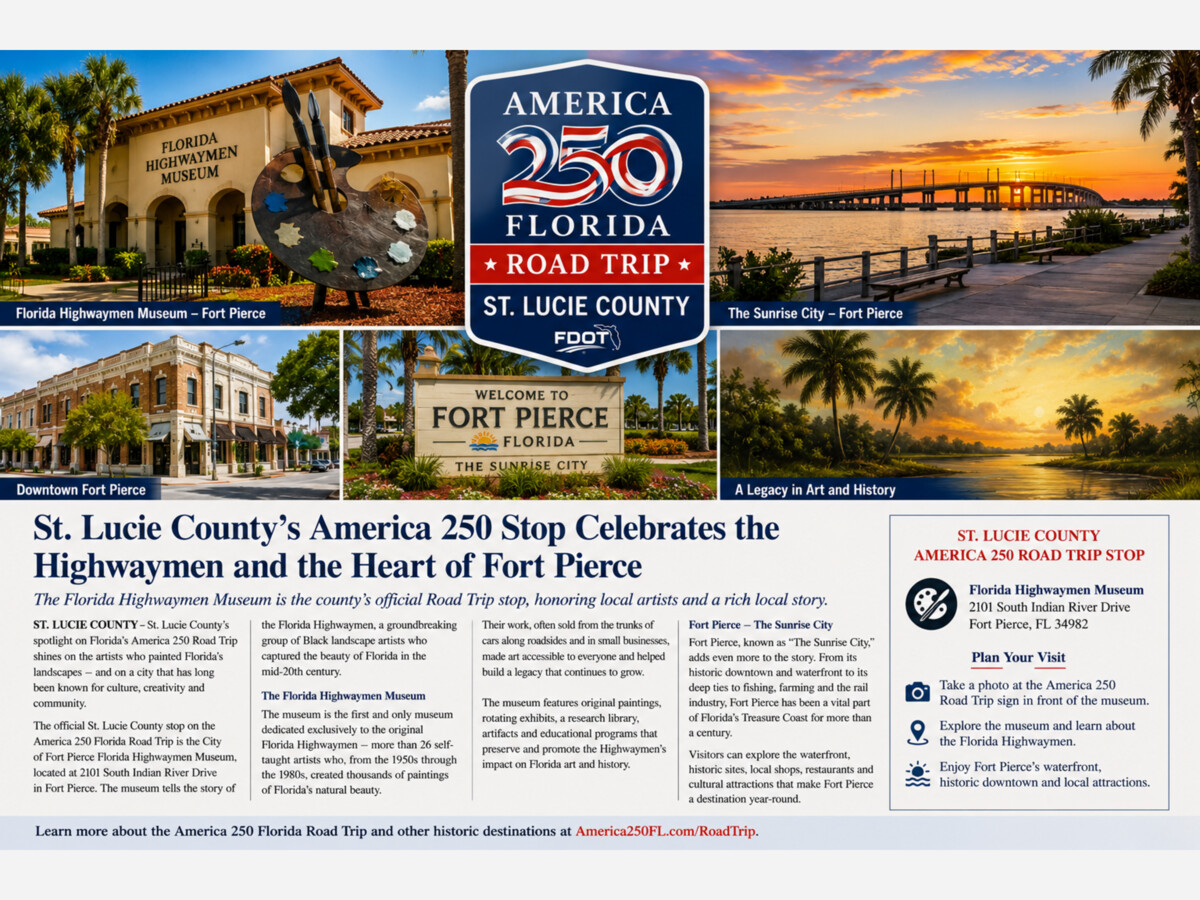



ST. LUCIE COUNTY — St. Lucie County’s America 250 story does not begin with a battlefield, a founding-era courthouse or a famous political speech.
It begins with paint, cars, roadside sales and a group of Black artists from Fort Pierce who turned exclusion into one of Florida’s most recognizable art movements.
The City of Fort Pierce Florida Highwaymen Museum is now giving that story a permanent local home. Located at 1234 Avenue D in the historic Lincoln Park community, the museum sits steps from where the Highwaymen movement began and is described by the city as the nation’s only museum with exhibitions that include paintings from each of the 26 renowned Highwaymen artists. [1]
That makes Fort Pierce the clear St. Lucie County highlight for Florida’s America 250 celebration.
America250FL lists a “Ribbon Cutting and Grand Opening of the City of Fort Pierce Florida Highwaymen Museum” as an official celebration event connected to the state’s semiquincentennial programming. The event is scheduled for Wednesday, July 8, from 2 p.m. to 6 p.m., with the City of Fort Pierce and the Original Florida Hall of Fame Highwaymen listed as the participating organizations. [2]
For Port St. Lucie residents, the stop is a short drive north. For Fort Pierce, it is a long-awaited recognition of a story that started locally and became nationally significant.
The Florida Highwaymen were 26 African American landscape artists who began painting in the 1950s. Shut out of traditional galleries during segregation, they created bold, colorful scenes of Florida’s natural beauty and sold them directly to customers along roadsides, from the trunks of cars and door to door. [1]
Their paintings captured a Florida that many residents still recognize emotionally, even as much of it has disappeared physically: royal poincianas, palmettos, glowing sunsets, wetlands, rivers, beaches and quiet stretches of land before heavy development changed the landscape.
The Fort Pierce connection is central. The city says the Highwaymen originated in Fort Pierce, and the Highwaymen Heritage Trail recognizes their local, state, national and international significance through a self-guided educational experience with kiosks, site markers, oral histories, research and public art. [3]
This was not just an art movement. It was also an entrepreneurial movement.
The artists created a market when the formal art world would not open the door. They painted quickly, priced their work to sell, traveled Florida’s highways and placed their art in homes, offices, motels and businesses across the state.
The Florida Department of State credits the term “Florida Highwaymen” to a 1995 article by Sebring gallery owner and collector Jim Fitch, who used it to describe the Fort Pierce-based artists and their practice of selling paintings from cars along I-95 and A1A. [4]
In 2004, the original 26 Highwaymen were inducted into the Florida Artists Hall of Fame, cementing their place in Florida cultural history. [1]
The new museum gives that legacy a physical anchor.
WPTV reported that the museum features 26 vibrant paintings by African American artists who sold their work along Florida highways in the 1960s, with each of the 26 artists represented in the museum. Family members of Highwaymen artists attended the opening, describing the museum as a long-overdue recognition of the group’s legacy in their hometown. [5]
That hometown detail matters.
Florida’s America 250 Road Trip is meant to point residents and visitors toward places that explain the state’s role in the larger American story. In St. Lucie County, that story is not abstract. It is tied directly to Fort Pierce, Lincoln Park and artists who used creativity and persistence to build a market for themselves when the system did not make room for them.
For the county, the museum also strengthens an existing cultural trail.
The Highwaymen Heritage Trail begins at the Seven Gables House, Fort Pierce’s Visitor Center, at 482 North Indian River Drive. The trail includes stops tied to the artists, their teachers, their work, and the places that shaped the movement. [3]
Together, the museum and trail give St. Lucie County a strong local history package for residents, school groups and visitors.
They also give Port St. Lucie a nearby America 250 story worth claiming. The county’s largest city may not be the site of the museum, but the Highwaymen legacy belongs to the broader St. Lucie community. It is part of the county’s identity, economy, tourism pitch and cultural inheritance.
As America prepares to mark 250 years since the signing of the Declaration of Independence, Fort Pierce is offering a different kind of patriotism story.
It is the story of artists who were blocked from the front door, so they took their work to the road.
They painted Florida before it was paved over. They sold beauty before institutions fully recognized their value. They turned cars, highways and persistence into a path forward.
That is why St. Lucie County’s America 250 highlight is more than a museum opening.
It is a reminder that American history is not only written by the powerful. Sometimes it is painted by people who refused to wait for permission.
[1] City of Fort Pierce, “Highwaymen Museum.”
[2] America250FL, official events listing, “Ribbon Cutting and Grand Opening of the City of Fort Pierce Florida Highwaymen Museum.”
[3] City of Fort Pierce, “The Highwaymen Heritage Trail.”
[4] Florida Department of State, Division of Arts and Culture, “Alfred Hair and the Florida Highwaymen.”
[5] WPTV, “Florida Highwaymen Museum opens in Fort Pierce, honoring 26 African American artists.”
:::


Patchy rain nearby, with a high of 89 and low of 79 degrees. Patchy rain nearby in the morning, clear overnight.