81° and Overcast
Image
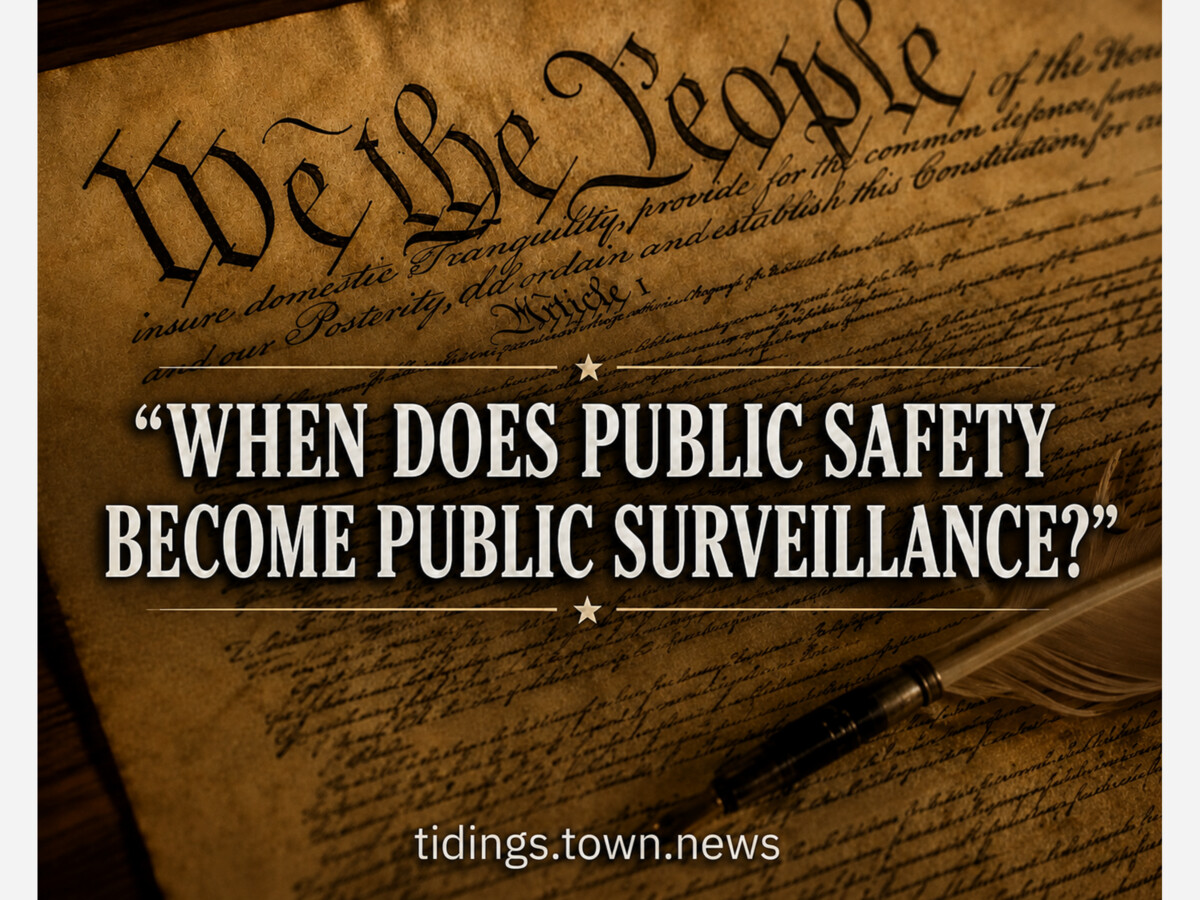



# Opinion: Florida Must Decide Where Public Safety Ends and Mass Surveillance Begins
I support law enforcement. I support giving officers the tools they need to solve violent crimes, locate missing children, recover stolen vehicles, and protect our communities.
I also believe government power must have limits.
Those beliefs have coexisted since the founding of our Republic. Public safety and individual liberty were never intended to be opposing ideals. The Constitution demands both.
The Fourth Amendment exists because America's founders understood that liberty is rarely taken away all at once. Governments accumulate power gradually, often through policies that appear reasonable in isolation but become far more significant when combined over time.
> "The right of the people to be secure in their persons, houses, papers, and effects, against unreasonable searches and seizures, shall not be violated."
That principle remains just as relevant in the digital age.
Across Florida, local governments continue expanding automated license plate reader systems such as those manufactured by Flock Safety. These cameras photograph every passing vehicle, regardless of whether its occupants are suspected of any crime. They document where Floridians travel, when they travel, and how frequently they visit particular locations.
A single scan reveals very little.
Millions of scans collected over months or years reveal something entirely different. They create a detailed historical record of a person's movements, associations, religious attendance, medical visits, political activity, and daily routine. That level of continuous monitoring would have been unimaginable when the Constitution was written, yet the constitutional protections remain unchanged.
Supporters often argue that law-abiding citizens have nothing to fear from this technology.
The Framers rejected that philosophy more than two centuries ago. Constitutional rights do not depend upon whether someone has done anything wrong. They exist precisely because government power requires meaningful limits.
Florida's Constitution provides even stronger privacy protections than the federal Constitution.
Article I, Section 23 declares:
> "Every natural person has the right to be let alone and free from governmental intrusion into the person's private life."
Few state constitutions contain language this direct. Floridians deliberately adopted it because they recognized that government authority naturally expands unless constitutional boundaries remain firmly enforced.
Florida law reflects the same concern. Section 316.0777 authorizes automated license plate recognition systems while restricting data retention and protecting identifying information from public disclosure. The Legislature recognized that location history deserves heightened protection because it reveals deeply personal aspects of an individual's life.
While today's Flock systems are marketed as optical license plate readers rather than Bluetooth or Wi-Fi surveillance devices, technology evolves rapidly. Any deployment of these systems should include explicit statutory prohibitions against collecting wireless device identifiers or similar electronic tracking data without judicial authorization. Constitutional protections should not depend solely upon a vendor's current product specifications.
Courts across the country are beginning to confront these constitutional questions. Litigation involving automated license plate reader systems is already underway, and judges have increasingly recognized that long-term, suspicionless location tracking presents serious Fourth Amendment concerns.
Technology advances far more quickly than constitutional litigation. That makes restraint even more important.
For that reason, Florida's elected officials should pause further expansion of automated license plate reader networks until these constitutional questions receive the public debate they deserve.
If governments choose to continue operating these systems, their use should be narrowly confined to active criminal investigations, supported by judicial oversight, the shortest practical data retention periods, and complete transparency regarding how the systems are used.
Government should bear the burden of demonstrating why continuous surveillance is necessary. Citizens should never bear the burden of justifying why they deserve privacy.
Floridians have long valued limited government, personal responsibility, and the right to be left alone. Those principles should not fade simply because surveillance technology has become inexpensive, automated, and politically convenient.
I encourage every Floridian to contact their city council members, county commissioners, sheriff, police chief, and state legislators. Ask whether automated license plate reader systems are operating in your community. Ask how long the data is retained, who has access to it, and what safeguards exist to prevent misuse. Public debate should precede the expansion of surveillance, not follow it.
Liberty rarely disappears overnight.
More often, it fades one camera at a time.



Overcast, with a high of 82 and low of 65 degrees. Light rain shower for the morning, overcast during the afternoon, clear for the evening, overcast overnight.