68° and Light drizzle
Image
Organizations dependent on increasing taxes generally aren't favorable to decreasing taxes.



As Florida voters prepare to decide one of the most consequential property tax proposals in state history, an increasingly important question is emerging alongside the policy debate itself:
Should organizations whose funding depends on property taxes be leading the campaign against reducing them?
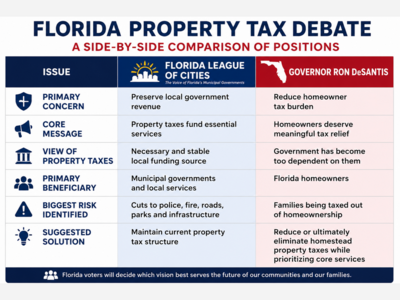
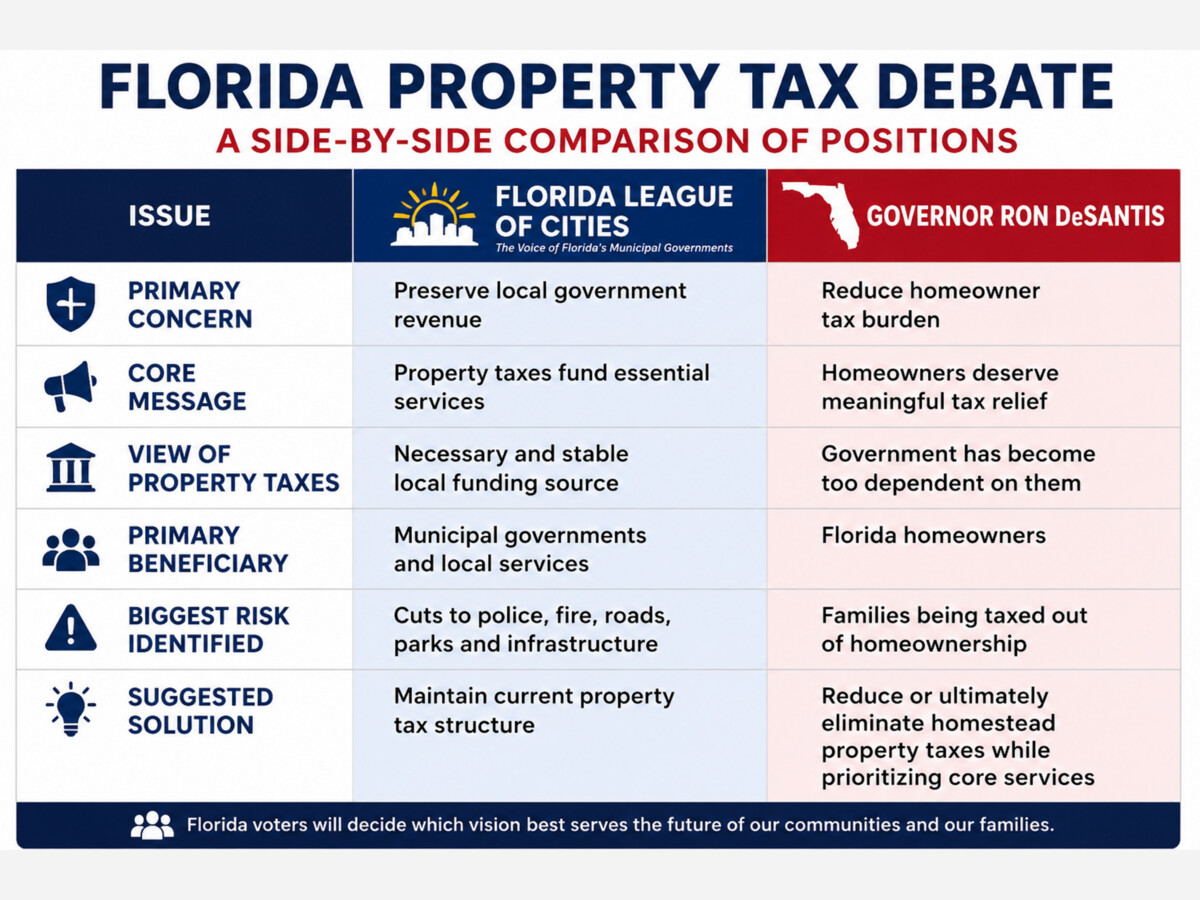
The Florida League of Cities has launched an extensive public education campaign opposing major reductions in local property tax revenue. The organization argues that property taxes fund essential local services including police, fire protection, roads, parks, water systems, and other municipal operations. It has created videos, reports, talking points, and educational materials warning that significant tax reductions could force service cuts or new fees.
From the League's perspective, the argument is straightforward. Cities rely heavily on property tax revenue to provide the services residents expect, and reducing that revenue without an alternative funding source could create difficult financial decisions.
Supporters of the ballot initiative see the issue very differently.
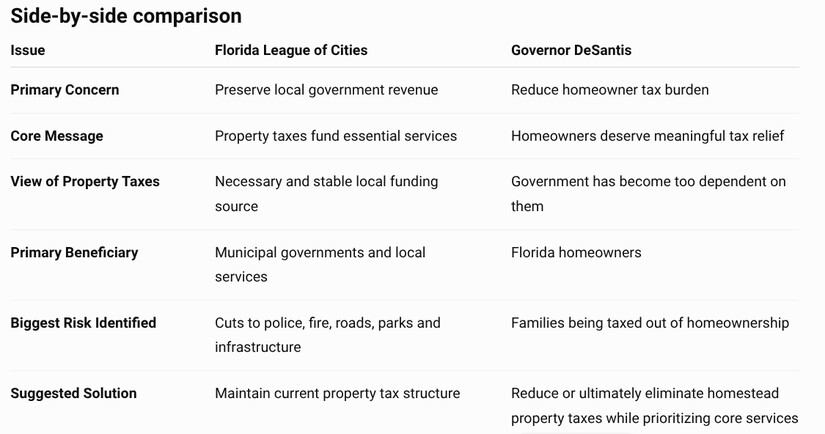
They argue that organizations representing cities and local governments have an inherent financial interest in preserving the current system because the governments they represent depend upon property tax collections to fund their operations. From that perspective, opposition from these organizations is entirely predictable.
Whether that constitutes a conflict of interest depends largely on how one defines the term.
Legally, organizations like the Florida League of Cities exist to advocate on behalf of municipal governments. Opposing policies that reduce municipal revenue is consistent with that mission.
Politically, however, critics argue that voters should recognize who is making the argument and what interests are being represented.
That distinction matters.
Imagine asking an industry trade association whether regulations should reduce the industry's revenue. Few would expect an unbiased answer.
Likewise, few would expect organizations representing cities to enthusiastically support measures that could reduce billions of dollars in local government funding.
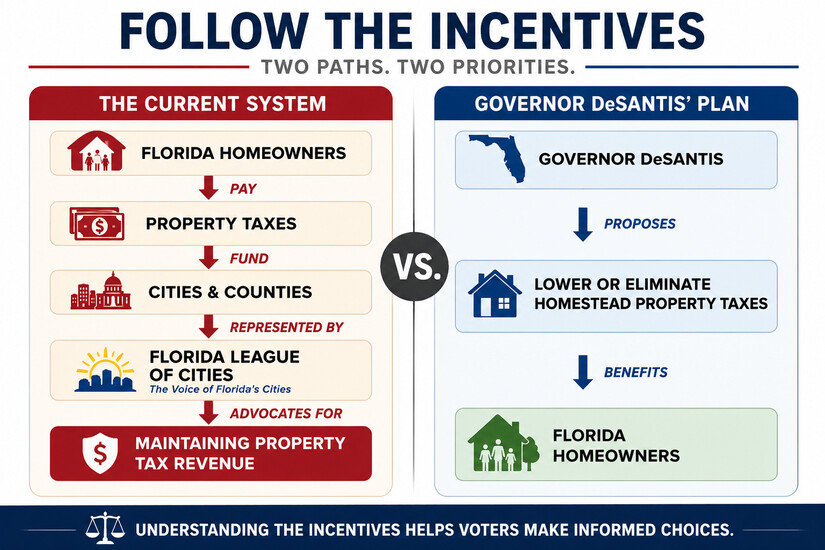
The Florida League of Cities has warned that the proposed constitutional amendment could force difficult choices regarding local services and infrastructure. Other local government organizations have expressed similar concerns, arguing that some communities could face severe financial strain if the amendment is approved. Citizens might benefit if an organization who was spending taxpayer money to lobby against taxpayer funding was among the first budget cuts.
Supporters of the amendment counter that these warnings overlook another possibility: that local governments could reduce spending, improve efficiency, prioritize core services, or eliminate programs that taxpayers may no longer wish to fund.
Governor Ron DeSantis has repeatedly argued that rapidly increasing property tax collections have encouraged unnecessary local government spending and that homeowners deserve meaningful relief.
Ultimately, Florida voters will have to sort through competing claims.
One side warns of reduced services.
The other argues that government should adapt to lower revenues just as families and businesses do every day.
What should not be overlooked is the source of many of these messages.
Organizations representing cities are expected to advocate for cities.
Organizations representing counties are expected to advocate for counties.
Taxpayer organizations are expected to advocate for taxpayers.
None of those perspectives is inherently illegitimate. But each comes with its own interests, priorities, and incentives.
As November approaches, Floridians would be wise to ask not only what is being argued, but also who benefits if that argument prevails.
In a debate over billions of taxpayer dollars, understanding the messenger may be just as important as understanding the message.


Overcast, with a high of 81 and low of 65 degrees. Light drizzle for the morning, light rain in the afternoon, cloudy for the evening, overcast overnight.