69° and Overcast
Image



TALLAHASSEE — Florida’s latest drug crackdown is aimed at something many parents, teachers and local residents may not recognize by name: 7-OH.
Attorney General James Uthmeier signed an emergency rule Monday placing highly concentrated 7-hydroxymitragynine — commonly shortened to 7-OH — and several related compounds under Florida’s Schedule I controlled-substance rules. The rule took effect immediately, giving law enforcement and state regulators authority to pursue felony-level enforcement, product seizures and action against illegal sellers.[1]
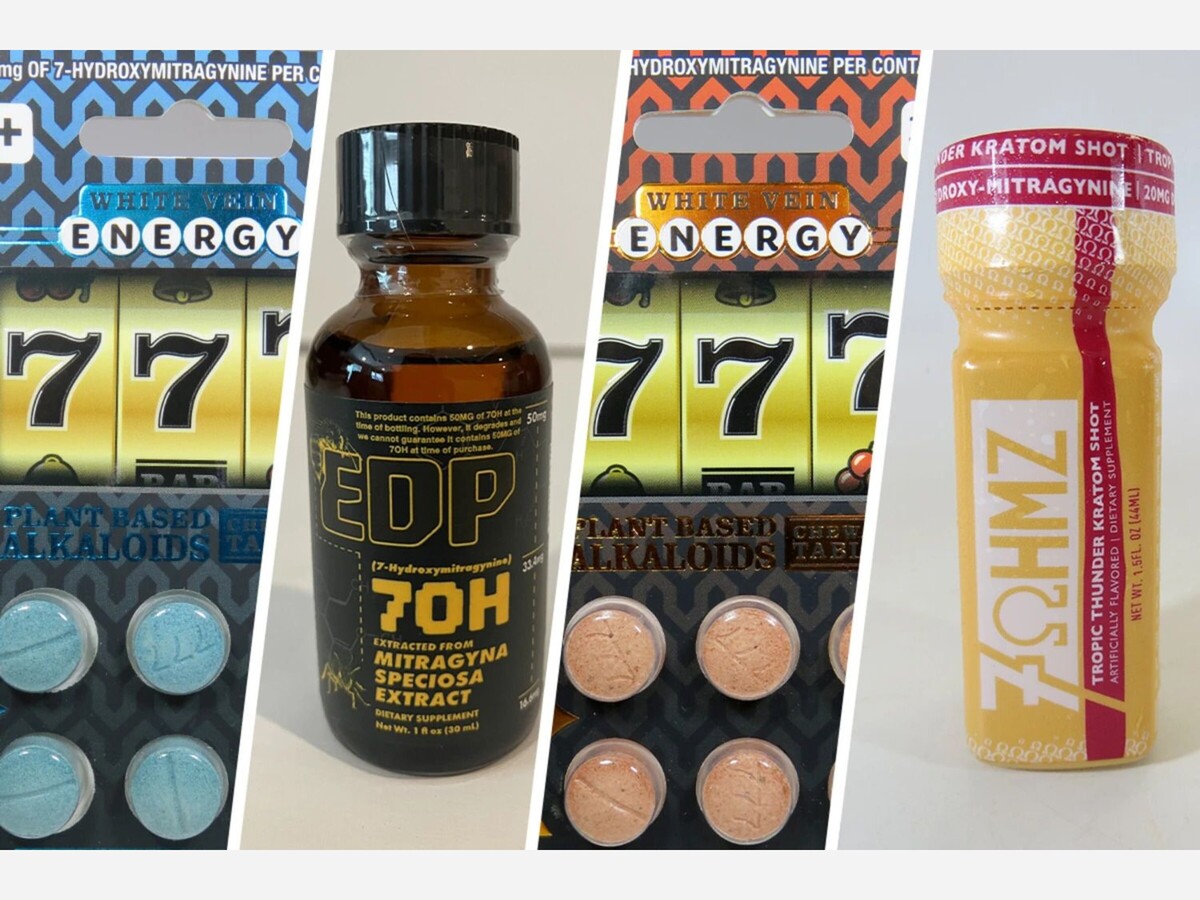
The state says this was not a hidden back-alley product. It was being sold across Florida in consumer packaging, often through the same retail channels where people buy drinks, snacks, vapes or over-the-counter wellness products. State and federal regulators have described 7-OH products appearing in gas stations, convenience stores, vape shops, smoke shops and online marketplaces, including tablets, gummies, shots, drink mixes, powders, capsules and other forms.[2]
Florida’s own enforcement numbers show how widely available these products had become. The Florida Department of Agriculture and Consumer Services said more than 23,000 illegal 7-OH packages have been removed from retailers across the state since the earlier emergency rule took effect. In September 2025, the Attorney General’s Office announced that 17,895 packages had already been seized, including gummies, energy drinks, vapes, pills, powders and other products.[3]
For readers who have never heard of 7-OH, the name sounds technical because it is. 7-OH is short for 7-hydroxymitragynine, a chemical compound associated with kratom, a tropical tree native to Southeast Asia. Kratom leaves naturally contain alkaloids, including mitragynine and very small amounts of 7-OH. In natural leaf kratom, 7-OH is typically present only in trace amounts.[4]
The public-safety concern is not simply that 7-OH can be found in kratom. The concern is that manufacturers have been selling concentrated or enhanced 7-OH products that no longer resemble traditional leaf kratom. The FDA says many of the products now on the market contain concentrated 7-OH, likely produced by chemically converting mitragynine from kratom extracts into stronger 7-OH formulations.[5]
In plain English: a plant compound that exists naturally in tiny amounts is being concentrated, packaged and sold in ways that make it much stronger and easier to consume.
That is why state and federal officials describe 7-OH as an opioid-like threat. The FDA says 7-OH binds to mu-opioid receptors, the same receptor family involved in drugs such as morphine and other opioids. The agency says 7-OH can be more potent than morphine, and its own scientific report says the compound is associated with opioid-like effects including euphoria, sedation, respiratory depression, physical dependence and withdrawal.[6]
The way 7-OH is used depends on the product. Some users swallow pills, capsules or gummies. Some drink liquid shots, beverages or drink mixes. Some tablets are marketed as chewable or sublingual, meaning they can be dissolved in the mouth. State officials have also reported seized products that included vapes. The retail packaging is part of the concern: health officials say some products are sold in flavors, formats and branding that can look closer to candy or convenience-store novelty items than a powerful drug product.[7]
Federal regulators have also warned that some 7-OH products are marketed as natural kratom, wellness products or alternatives for pain, anxiety, mood issues or opioid withdrawal. The FDA says there are no FDA-approved drugs containing 7-OH, that 7-OH is not lawful in dietary supplements, and that it cannot lawfully be added to conventional foods.[8]
Florida’s new emergency rule goes beyond the state’s earlier 2025 action. It covers 7-hydroxymitragynine and several related compounds, including mitragynine pseudoindoxyl, 7-acetoxymitragynine, 9-hydroxycorynantheidine, 10-hydroxycorynantheidine, MGM-15 and MGM-16. The rule prohibits products from containing more than 1 milligram per gram for solid or powdered products, including capsules, or more than 1 milligram per milliliter for liquids, including beverages, extracts and tinctures. It also requires any product containing any amount of the covered compounds to have at least 100 parts regular mitragynine for every one part of those compounds by mass.[9]
Uthmeier said the emergency rule was signed because concentrated 7-OH products present an “imminent hazard” to Floridians, especially children and teens. Agriculture Commissioner Wilton Simpson said FDACS inspectors will continue routine checks and targeted sweeps across the state. State Surgeon General Dr. Joseph Ladapo said concentrated 7-OH products act on opioid receptors and have been linked to addiction, overdose and seizures.[10]
The Tampa Bay connection is not theoretical. Tampa General Hospital and Florida Poison Control Tampa officials were included in the state’s announcement. Tampa General’s Melissa Golombek said emergency departments are seeing patients who bought these products at nearby convenience stores without understanding how dangerous they could be. Dr. Cory Howard, an emergency physician and toxicologist affiliated with Tampa General, USF and Florida Poison Control Tampa, said 7-OH exposure and overdose cases have been increasing and affecting Floridians “from infants to the elderly.”[11]
The Attorney General’s Office said Florida medical examiners have linked at least 587 overdose deaths to 7-OH products since 2013, with hundreds of recent Poison Control cases and more than 25% requiring ICU care. Those numbers explain why the state is treating the issue as a retail-store drug problem, not merely a labeling dispute.[12]
For parents and consumers, the practical warning is simple: look beyond the word “kratom” and check labels for 7-OH, 7-hydroxy, 7-hydroxymitragynine, 7-OHMG, 7-HMG, or “7.” The FDA tells consumers to avoid products containing 7-OH and to contact Poison Help at 1-800-222-1222 if someone has a bad reaction. If a person is unresponsive, call 911 immediately.[13]
For retailers, the message from Florida regulators is equally direct. FDACS has told food establishments to review kratom products, certificates of analysis and labels to ensure compliance. Products that violate the state’s controlled-substance rules may be placed under stop-sale orders, seized or referred for further enforcement.[14]
Florida’s move should also reset the local conversation around “legal highs” and gas-station wellness products. The danger is not always in a dark package or a street-corner transaction. Sometimes it is sitting on a shelf, dressed up as a gummy, shot, tablet or drink mix, under a name most families have never heard before.
[1] Florida Office of the Attorney General, “Attorney General James Uthmeier Signs Emergency Rule Immediately Scheduling Dangerous 7-OH and Related Compounds as Schedule I Controlled Substances,” June 22, 2026.
[2] U.S. Food and Drug Administration, “FDA Takes Steps to Restrict 7-OH Opioid Products Threatening American Consumers,” July 29, 2025; FDA, “FDA Issues Warning Letters to Firms Marketing Products Containing 7-Hydroxymitragynine,” July 15, 2025.
[3] Florida Office of the Attorney General, “Attorney General James Uthmeier Announces Seizure of Nearly 18,000 7-OH Products Statewide,” Sept. 18, 2025; Florida Office of the Attorney General, June 22, 2026 release.
[4] FDA, “FDA and Kratom”; FDA, “7-Hydroxymitragynine (7-OH): An Assessment of the Scientific Data and Toxicological Concerns Around an Emerging Opioid Threat.”
[5] FDA, “7-Hydroxymitragynine (7-OH): An Assessment of the Scientific Data and Toxicological Concerns Around an Emerging Opioid Threat.”
[6] FDA, “FDA Takes Steps to Restrict 7-OH Opioid Products Threatening American Consumers”; FDA scientific report on 7-OH.
[7] FDA, “Preventing The Next Wave of the Opioid Epidemic: What You Need to Know About 7-OH”; Florida Office of the Attorney General, Sept. 18, 2025 release.
[8] FDA, “FDA Issues Warning Letters to Firms Marketing Products Containing 7-Hydroxymitragynine,” July 15, 2025.
[9] Florida emergency rule 2ER26-1, effective June 22, 2026.
[10] Florida Office of the Attorney General, June 22, 2026 release.
[11] Florida Office of the Attorney General, June 22, 2026 release.
[12] Florida Office of the Attorney General, June 22, 2026 release.
[13] FDA, “Preventing The Next Wave of the Opioid Epidemic: What You Need to Know About 7-OH.”
[14] Florida Department of Agriculture and Consumer Services, Food Permit Center alerts and Kratom Product FAQ, updated June 2026.


Sunny, with a high of 76 and low of 59 degrees. Sunny for the morning, clear for the afternoon and evening,