81° and Overcast



Image
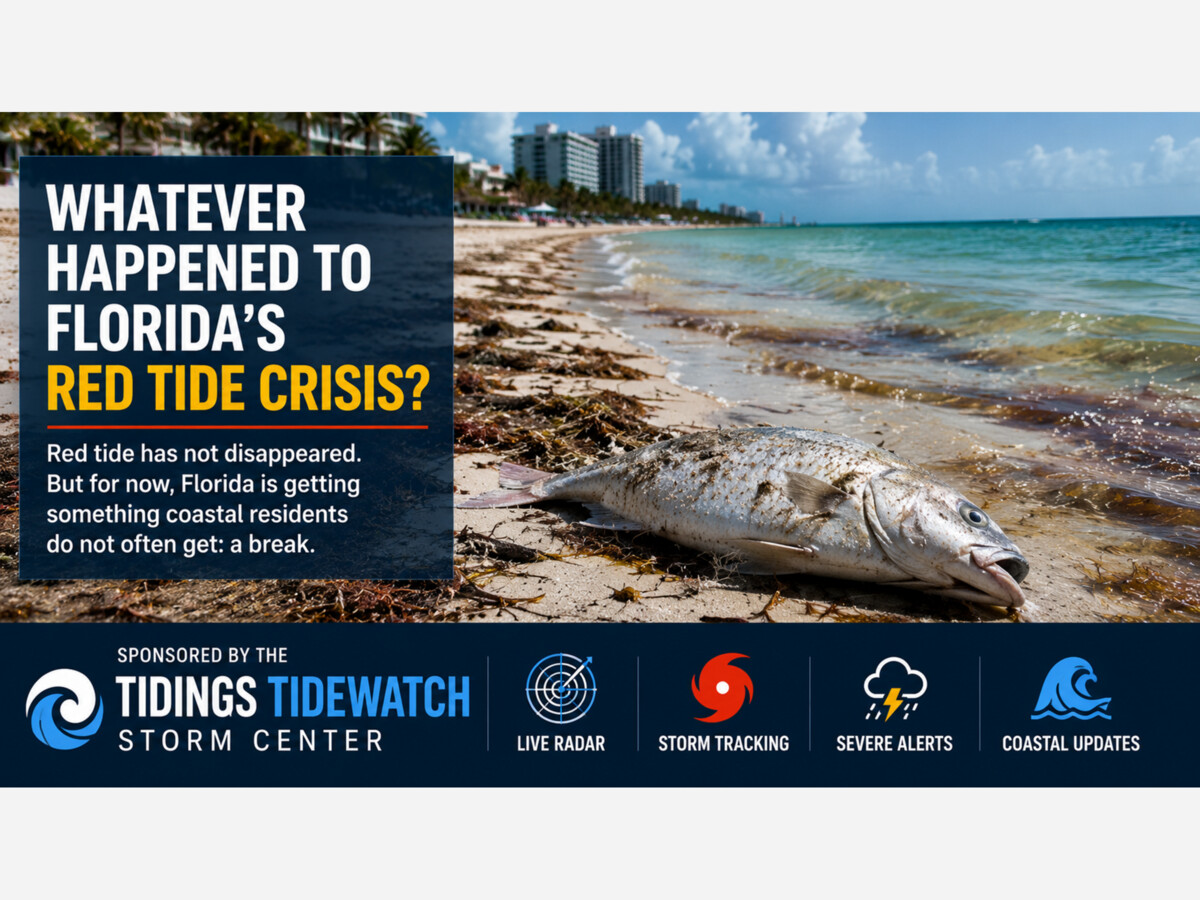
A few years ago, red tide was one of the most visible environmental stories in Florida.
Dead fish washed onto Gulf beaches. Beachgoers coughed near the shoreline. Coastal businesses worried about tourists canceling trips. Residents in places like Pinellas, Manatee, Sarasota, Lee and Collier counties checked red tide maps the way people check hurricane cones.
Then, for the moment, the story got quiet.
That does not mean red tide is gone. It never really disappears from Florida’s risk map. But as of the latest state and federal monitoring, Florida is not dealing with the kind of widespread red tide event that dominated headlines in recent years.
The Florida Fish and Wildlife Conservation Commission’s current red tide report says no fish kills suspected to be related to red tide were reported to FWC’s Fish Kill Hotline or partners over the past week. FWC also says respiratory irritation suspected to be related to red tide was not reported over the past week.¹
NOAA’s Gulf Coast Harmful Algal Bloom Forecast is also quiet. Its current Florida condition statement says there is no risk of respiratory irritation from red tide, caused by Karenia brevis, at this time.²
That is good news. It is also the kind of good news Floridians should not misunderstand.
Red tide is not a problem Florida solved. It is a problem Florida is not being punished by right now.
The organism behind most Florida red tide events is Karenia brevis, a naturally occurring microscopic algae found in the Gulf of Mexico. When it blooms in high enough concentrations, it can produce toxins that kill fish and irritate the eyes, throats and lungs of people near affected beaches. It can also affect sea turtles, birds, dolphins and manatees.³
That is why a quiet red tide report matters. It affects more than beach comfort. It affects tourism, fishing, restaurants, hotels, wildlife, public health, local government cleanup costs and the reputation of entire coastal communities.
Anyone who lived through a bad bloom remembers the smell. The dead fish. The cough. The empty beach. The apologetic restaurant server telling visitors it is usually not like this.
For now, Florida is not living that version of the story.
The better question is why.
There is no single simple answer. Red tide blooms depend on a mix of offshore conditions, currents, wind, nutrients, water temperature, and whether blooms move toward shore or remain offshore. Hurricanes and storms can complicate the picture. They can disrupt blooms, but they can also stir nutrient-rich waters and wash nutrients from land into coastal systems.⁴
That is why red tide is so frustrating. It is natural, but not entirely disconnected from human activity. It can begin offshore, but what happens near shore can influence how bad the impacts become. It can vanish from the headlines, then return quickly when conditions line up.
This is also why current conditions should be treated as a reprieve, not a victory parade.
Florida has improved monitoring and communication. FWC posts statewide red tide status updates, maps and reports. NOAA provides beach-level respiratory forecasts using field samples, wind speed and direction. The state’s Protecting Florida Together water quality dashboard links residents to statewide water quality information, including red tide data.⁵
That is useful progress. It gives residents and visitors better tools than rumors, Facebook posts, or “my cousin said the beach is bad.”
But information is not prevention.
A clear map today does not guarantee a clear map next month. Red tide can develop, move, intensify or weaken depending on conditions. It can also affect one stretch of coastline while leaving another relatively normal. That is why statewide panic is usually unhelpful, but local awareness is essential.
For beachgoers, the practical advice is simple. Check current conditions before you go. If you have asthma, COPD or other respiratory problems, pay attention to NOAA’s respiratory irritation forecast. If you see dead fish, discolored water, or people coughing near the shore, take it seriously. Do not harvest shellfish from waters affected by red tide. If you see fish kills or sick wildlife, report them.⁶
For local governments and policymakers, the advice is different. Do not wait until the dead fish are on the beach to care about water quality.
Florida’s red tide conversation too often works like this: crisis, outrage, cleanup, hearing, press conference, silence. Then the next bloom arrives and everyone acts surprised.
That is not good enough for a state whose economy and identity are built around water.
Coastal Florida lives on clean beaches, healthy estuaries, fishing, boating, tourism, seafood, waterfront property, and the idea that people can still stand at the edge of the Gulf and breathe. Red tide threatens all of that when it gets bad enough.
So yes, the current news is encouraging. Florida is not facing a major statewide red tide event right now. FWC is not reporting red tide-related fish kills over the past week. NOAA is not forecasting respiratory irritation risk from red tide at this time.
That is worth saying clearly.
But the bigger story is not that red tide disappeared. It is that Florida has a chance, while the beaches are relatively quiet, to pay attention before the next bloom forces everyone to care again.
Red tide has faded from the headlines.
It has not faded from Florida’s future.
Stay connected with Tidings Media: Tidings Media offers local curated news for Tampa, Tallahassee, Miami, Jacksonville, Orlando, Port St. Lucie, Fort Lauderdale, Cape Coral, Hialeah, Hollywood, Pembroke Pines, and Zephyrhills. Subscribe free at tidings.town.news for local headlines, weather alerts, civic updates, practical Florida news, and community stories without the clutter.
About Tidings Media: Tidings Media is a local news and information network built to give Florida communities useful, curated coverage of the issues that affect daily life — from weather and public safety to government, schools, business, taxes, growth, and quality of life. Our goal is simple: make local news easier to follow, easier to trust, and easier to use.
Footnotes:


Light rain shower, with a high of 89 and low of 74 degrees. Overcast in the morning, light rain shower in the afternoon, overcast overnight.