Image



Florida heat is not just uncomfortable. It is hard on machines.
When the heat index climbs, drought conditions drag on, and central air conditioners run almost nonstop, small maintenance problems can quickly become expensive emergency calls. The system that cooled your house yesterday may shut down today for a reason that had nothing to do with a major mechanical failure.
Sometimes, the problem is water.
One of the first things homeowners should check during this kind of heat is the outside condensate drain line — the small PVC pipe, usually outside the home, where moisture from the air conditioning system drains away.
A central air conditioner does not just cool the air. It also removes humidity. In Florida, that means a working A/C system can pull a surprising amount of water out of the house. If that drain line clogs, backs up, or holds too much water and sludge, the system may stop draining properly. Many systems have safety switches designed to shut the unit down before water backs up into the home.
That shutdown can feel like an A/C failure, but in some cases, it may be a preventable drain-line problem.
I was reminded of that tonight. Using a shop vac on the outside moisture drain lines for two central air units, I probably pulled close to a gallon of water from the lines. That is water that was sitting in the system instead of draining freely. Left alone, that kind of backup can eventually keep the system from breathing and draining the way it should — and it can lead to the dreaded preventable service call.
The fix is simple enough for many homeowners to understand, but it still needs to be done carefully.
Locate the outside condensate drain outlet, which is usually just a low to the ground open ended PVC pipe. Hook a wet/dry shop vac to the end of the pipe. Use a rag or towel to create a better seal around the hose if needed. Run the vacuum long enough to pull out standing water, algae, sludge, or debris. If the shop vac pulls out dirty water or gunk, that is a sign the line needed attention.
This is not glamorous home maintenance. It is Florida home survival.
This weekend, I will also run Uncle Todd’s HVAC Drain Line Cleaner through both of my A/C drain lines as a follow-up treatment after vacuuming the lines from the outside.
The first step is to turn the A/C system off at the thermostat. Then locate the condensate drain access point near the indoor air handler. In many Florida homes, this is a small vertical PVC pipe with a removable cap near the inside unit.
Before adding any cleaner, go outside and hook a wet/dry shop vac to the end of the exterior drain line. Use a rag or towel around the hose to create a tighter seal, then run the vacuum for a few minutes. This helps pull out standing water, algae, sludge, and loose debris already sitting in the line. (I did this tonight, but I will probably do it again before I add the drain line cleaner this weekend.)
After that, go back inside and pour the HVAC drain line cleaner into the condensate drain access opening, following the amount and timing listed on the product label. Uncle Todd’s markets its HVAC Drain Line Cleaner as a bleach-free, plant-based, biodegradable cleaner designed to break down organic buildup in HVAC drain lines, including mold, algae, mildew, sludge, and dirt that can lead to clogs and overflows.[8]
Do not pour the cleaner into the outdoor condenser unit. This treatment goes into the condensate drain line, usually accessed near the indoor air handler. Also, do not mix it with bleach, vinegar, drain opener, or other chemicals.
After the cleaner has had time to work, flush the line gently with warm water if the product instructions allow it. Pour slowly. The goal is to help move loosened buildup through the line, not overflow the drain pan.
Then go back outside and shop-vac the exterior drain outlet one more time. This second vacuum pull may remove the loosened sludge and dirty water the cleaner helped break up.
Once finished, turn the A/C back on and confirm that water is draining from the outside pipe after the system has been running. In Florida humidity, a working central air conditioner should normally produce condensate consistently while it runs.
For homes with two central air units, repeat the process separately for each drain line. One clean drain does not help the other system.
If the drain line keeps backing up, the float switch keeps shutting the system down, water appears around the air handler, or the A/C shuts off again after cleaning, it is time to call a licensed HVAC professional. At that point, the issue may be a deeper clog, a blocked trap, a dirty drain pan, a bad slope in the line, or a problem with the float switch.
Step-by-Step Drain Line Treatment
— Turn the A/C off at the thermostat.
— Locate the condensate drain access pipe near the indoor air handler.
— Go outside and shop-vac the exterior drain line first.
— Pour HVAC drain line cleaner into the indoor condensate drain access opening, following the label directions.
— Do not mix the cleaner with bleach, vinegar, or other chemicals.
— Let the cleaner sit for the label-recommended time.
— Flush gently with warm water if the instructions allow it.
— Shop-vac the outside drain outlet again.
— Turn the A/C back on.
— Confirm that water is draining outside after the unit runs.
— Repeat the process separately for each central air unit.
ENERGY STAR specifically recommends checking and inspecting the condensate drain in central air conditioners, warning that a plugged drain can cause water damage and affect indoor humidity. The U.S. Department of Energy also warns that clogged drain channels can prevent the system from reducing humidity and may lead to excess moisture and damage.
During a heat wave, that drain line should move up the homeowner checklist.
After the drain line, the next priority is airflow outside.
Walk outside and look at the condenser unit — the metal box with the fan. If the sides or base are packed with leaves, grass clippings, oak debris, pollen, seed pods, mulch dust, or weeds, the system has to fight harder to get rid of heat. The Department of Energy advises homeowners to keep the area around the condenser clean and trim foliage back at least two feet so the unit has adequate airflow.
A shop vac is useful here, too. With power to the unit turned off, homeowners can carefully vacuum loose debris from the outside panels, around the base, and from the slab or pad. Do not jam tools into the fins. Do not bend the aluminum fins. Do not remove panels unless you know what you are doing. But loose debris sitting against the unit should not be ignored.
Coil cleaning is the next level.
Condenser coil cleaner is sold at Lowe’s, Home Depot, and most hardware stores for around $10-$20 depending on brand and size. Used properly, it can help remove grime from the outside coil surfaces. Homeowners should always read the label, follow manufacturer instructions, turn off power before cleaning, avoid pressure washing, and rinse only as directed.
The goal is to clean the coil, not damage it.
ENERGY STAR warns that dirty evaporator and condenser coils reduce cooling ability, make systems run longer, increase energy costs, and reduce equipment life. In a Florida heat wave, that is a bad combination.
Filters are just as important.
In normal weather, some homeowners think of air filters as a monthly or every-few-months chore. In this kind of heat, that may not be aggressive enough. If the A/C is running nearly all day, the filter should be checked often — especially in homes with pets, dust, construction nearby, heavy pollen, or frequent door traffic.
The Department of Energy recommends cleaning or replacing filters every month or two during cooling season, and more often when the system is in constant use, exposed to dusty conditions, or serving homes with pets. ENERGY STAR also advises homeowners to inspect, clean, or change filters monthly, warning that dirty filters make systems work harder and can damage equipment.
Put simply: if your A/C is running constantly, check the filter constantly.
A clogged filter restricts airflow across the indoor coil. That can make the system run longer, cool worse, raise the electric bill, and in some cases contribute to icing or shutdowns. During a brutal heat stretch, a $10 to $25 filter may help prevent a much more expensive repair visit.
Homeowners should also reduce the heat load inside the house.
Close blinds and curtains during the hottest part of the day, especially on west-facing windows. Avoid using the oven, clothes dryer, or other heat-producing appliances during peak afternoon heat if possible. Use ceiling fans when rooms are occupied, but turn them off when rooms are empty. Fans cool people, not houses.
And stop fighting the thermostat.
Dropping the thermostat from 76 to 68 during the hottest part of the day will not usually make the house cool faster. It usually just makes the system run longer. In extreme heat, some systems may struggle to hold a low setting no matter how hard they run. A reasonable set point, clean filter, clear drain line, clean outdoor unit, shaded windows, and good airflow can do more than thermostat panic.
There are also warning signs homeowners should not ignore.
If the outdoor fan is not spinning, the system is blowing warm air, the indoor coil is icing up, the breaker keeps tripping, the unit is making grinding or electrical noises, or the drain line keeps backing up after cleaning, call a licensed HVAC professional. Refrigerant levels, capacitors, blower motors, electrical components, and sealed-system issues are not do-it-yourself repairs.
But before assuming the worst, check the basics.
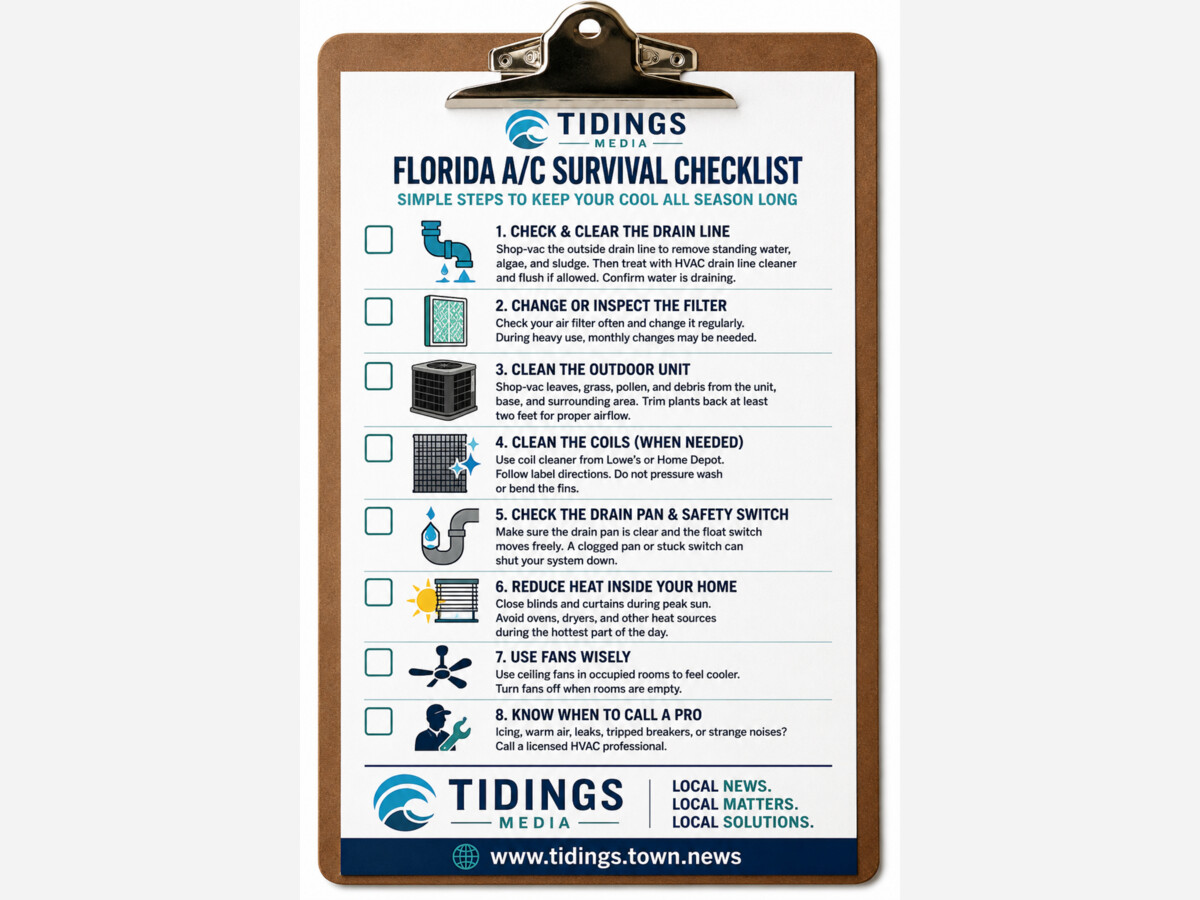
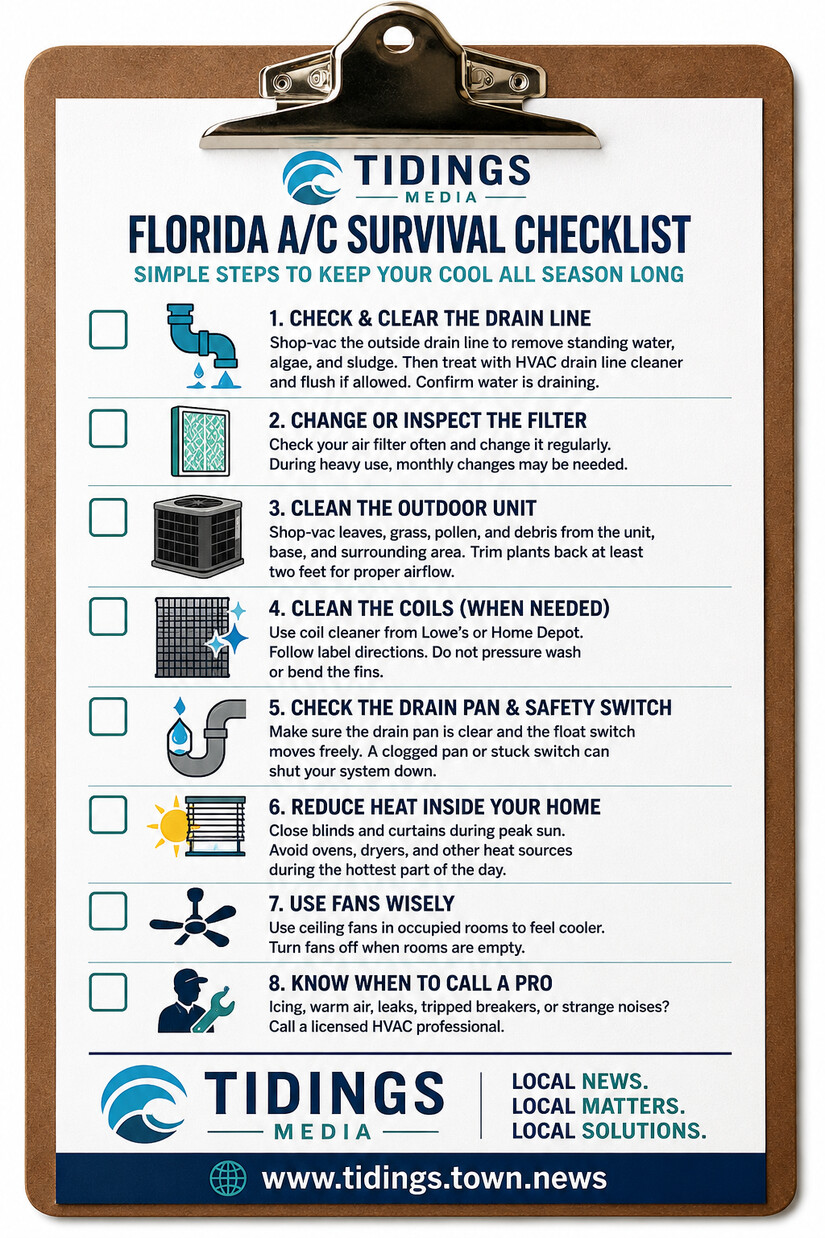
In this kind of Florida heat, the practical homeowner order should be simple: clear the condensate drain line, change the filter, clear the outdoor condenser, clean coils carefully when appropriate, keep the area around the unit open, and reduce unnecessary heat inside the house.
Your A/C system is probably the hardest-working machine in your home right now.
Give it a fighting chance before it gives up.
Before the next brutal afternoon:
— Use a wet/dry shop vac on the outside condensate drain line.
— Pull out standing water, algae, sludge, and debris from the drain line.
— Change or inspect the air filter.
— Shop vac leaves, grass clippings, dust, and debris from around the outdoor condenser.
— Trim plants and weeds back at least two feet from the outdoor unit.
— Use condenser coil cleaner carefully, following product and manufacturer instructions.
— Do not pressure wash or bend the coil fins.
— Close blinds during peak sun.
— Avoid unnecessary oven, dryer, and heat-producing appliance use during the hottest part of the day.
— Use ceiling fans when rooms are occupied.
— Call a professional if the system is icing, leaking, tripping breakers, blowing warm air, making unusual noises, or repeatedly shutting down.
Tidings Media covers practical Florida news, civic issues, weather, schools, local government, and community stories across Florida markets. Our focus is independent local journalism that helps readers understand what is happening in their communities and how it affects daily life.
Stay connected with Tidings Media: Tidings Media offers local curated news for Tampa, Tallahassee, Miami, Jacksonville, Orlando, Port St. Lucie, Fort Lauderdale, Cape Coral, Hialeah, Hollywood, Pembroke Pines, and Zephyrhills. Subscribe free at tidings.town.news for local headlines, weather alerts, civic updates, practical Florida news, and community stories without the clutter.
[1] ENERGY STAR, Maintenance Checklist. ENERGY STAR recommends checking and inspecting the condensate drain in a central air conditioner and warns that a plugged drain can cause water damage and affect indoor humidity.
[2] U.S. Department of Energy, Air Conditioner Maintenance. DOE states that clogged drain channels can prevent air conditioners from reducing humidity and may cause excess moisture that can discolor walls or carpet.
[3] U.S. Department of Energy, Air Conditioner Maintenance. DOE advises keeping the outdoor condenser area clean, removing debris, and trimming foliage back at least two feet for airflow.
[4] ENERGY STAR, Maintenance Checklist. ENERGY STAR states that dirty evaporator and condenser coils reduce cooling ability, make systems run longer, increase energy costs, and reduce equipment life.
[5] U.S. Department of Energy, Air Conditioner Maintenance. DOE recommends cleaning or replacing air conditioner filters every month or two during cooling season, with more frequent checks during constant use, dusty conditions, or homes with pets.
[6] ENERGY STAR, Maintenance Checklist. ENERGY STAR advises homeowners to inspect, clean, or change air filters monthly and warns that dirty filters make heating and cooling systems work harder and can damage equipment.
[7] National Weather Service Tampa Bay, Local Drought / Rainfall Information. The NWS Tampa Bay office maintains current drought and rainfall information for West Central and Southwest Florida.
[8] Uncle Todd’s, HVAC Drain Line Cleaner product description. The manufacturer describes the product as bleach-free, plant-based, non-toxic, biodegradable, and designed to clear organic gunk and buildup in HVAC drain lines, including mold, algae, mildew, sludge, and dirt that can lead to clogs and overflows.



Sunny, with a high of 80 and low of 61 degrees. Sunny during the morning, clear in the afternoon and evening,