

Image
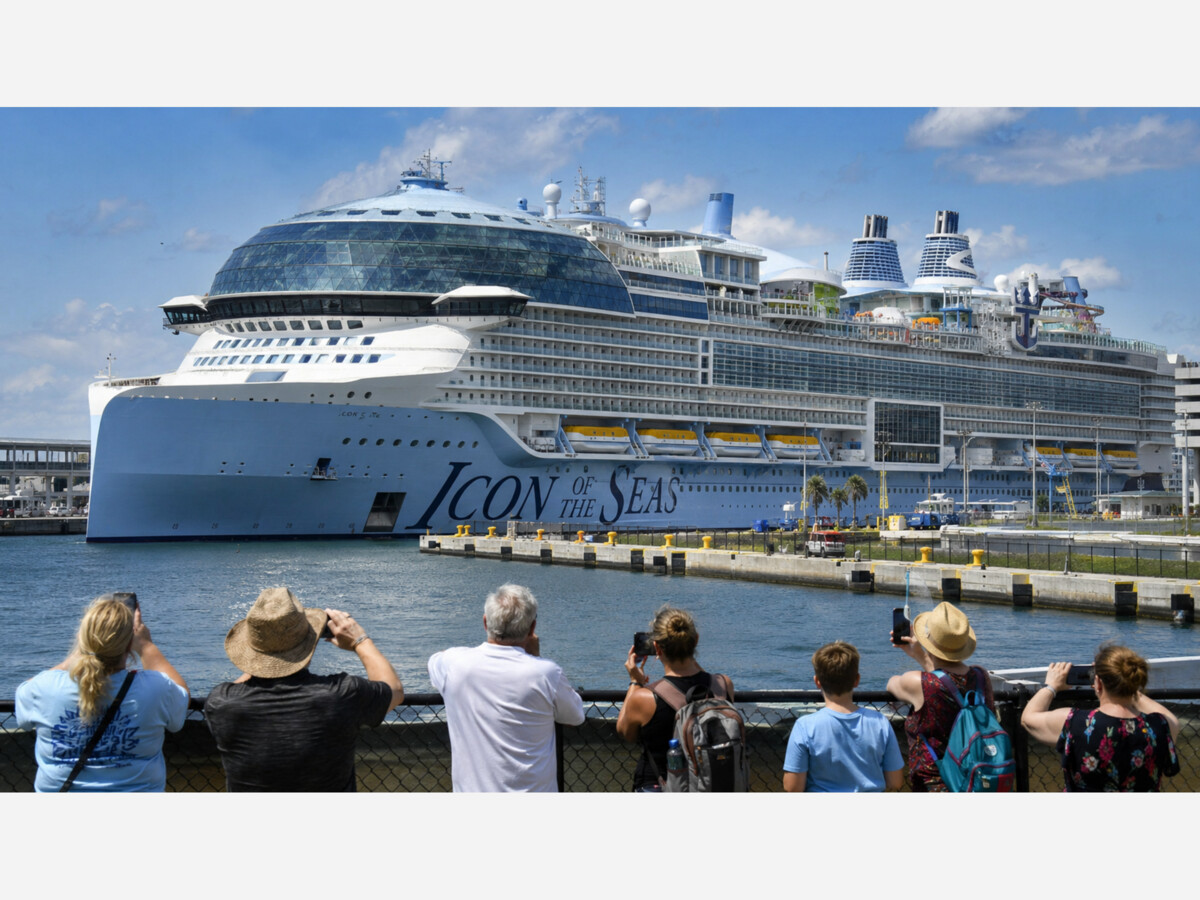
Port Canaveral just edged out PortMiami as the world’s busiest cruise port, PortMiami still set its own record, Port Everglades hit a new record, Tampa is tracking toward another record and talking about a fourth cruise terminal, and Jacksonville is expanding beyond Carnival with Norwegian.
Florida has always been a vacation state. Now it is becoming something even bigger: the launchpad for floating cities.
The latest cruise numbers show a statewide industry that is not merely recovering from the pandemic years. It is expanding, competing and forcing Florida’s port cities to make expensive decisions about terminals, traffic, parking, hotels, transportation and waterfront land.
Port Canaveral says it is now the world’s busiest cruise port, with more than 8.6 million revenue passenger movements in fiscal year 2025. PortMiami, long branded as the “Cruise Capital of the World,” also had a record year, welcoming 8,564,225 cruise passengers. Port Everglades, serving Greater Fort Lauderdale, posted a preliminary fiscal 2025 total of 4,773,873 cruise passengers. Port Tampa Bay says it handled a record 1.66 million cruise passengers in 2025 and is tracking toward 1.8 million in 2026. Jacksonville, smaller than the other Florida cruise giants, has added Norwegian Cruise Line service, expanding beyond its longtime Carnival presence.
That is the real story: Florida’s cruise industry is booming, but the boom is becoming a race.
And in Florida, races involving growth, tourism and infrastructure usually come with a question attached: who benefits, and who pays?
Port Canaveral’s announcement was the kind of headline ports dream about. The Brevard County port said it had become the busiest cruise port in the world, with more than 8.6 million revenue passenger movements in fiscal year 2025. That was a 13 percent increase over fiscal year 2024 and the highest cruise total in the port’s history.
That number matters far beyond Cape Canaveral.
Port Canaveral serves the Orlando tourism market without being in Orlando. For millions of travelers, the modern Central Florida vacation is no longer only a theme-park trip. It can be Disney, Universal, a beach day, a hotel stay and then a cruise. Port Canaveral has become the oceanfront extension of the Orlando tourism machine.
That gives Canaveral a powerful advantage. Orlando already has the airport, the hotels, the rental cars, the family vacation planners and the global name recognition. Port Canaveral gives that same visitor a ship.
The result is a tourism corridor that stretches from the theme parks to the Atlantic.
PortMiami did not disappear because Canaveral took the top spot. In fact, Miami had its own record year.
Miami-Dade County announced that PortMiami welcomed 8,564,225 cruise passengers in fiscal year 2025, up from 8,233,056 the prior fiscal year. That was a 4.02 percent increase and the highest annual passenger count in the seaport’s history.
The Miami story is different from Canaveral’s. Canaveral has the Orlando pipeline. Miami has the global cruise headquarters, the international brand, the skyline, the airport, the hotels, the Caribbean identity and decades of history as the cruise capital.
Losing the world’s-busiest title, even by a relatively small margin, gives Miami a competitive problem more than an economic collapse. PortMiami is still one of the most important cruise ports on earth. But the symbolism matters. Florida’s cruise crown is no longer uncontested.
For Miami, the question is not whether it remains a cruise powerhouse. It does.
The question is whether the title “Cruise Capital of the World” still feels automatic when another Florida port is posting bigger numbers.
Port Everglades is also having a record moment.
The Broward County port reported preliminary fiscal 2025 cruise passenger totals of 4,773,873, up from 4,127,715 in fiscal 2024. That includes more than 4.6 million multi-day cruise passengers.
For Fort Lauderdale, cruise growth fits into a broader tourism identity: airport access, beaches, hotels, conventions, boating, luxury travel and proximity to Miami without being Miami. Port Everglades does not need to beat Canaveral or Miami to matter. It only needs to keep attracting the ships and passengers that support Broward’s hospitality economy.
That economy is large. Cruise passengers fill hotel rooms before and after sailings. They use ride-share services, taxis, restaurants, parking lots, airports and local attractions. They generate port revenue and tourism tax activity. They also add to congestion and infrastructure demand.
That is the tradeoff every Florida cruise market now faces.
On the Gulf Coast, Port Tampa Bay is trying to keep up with demand.
The port said it welcomed a record 1.66 million cruise passengers in 2025 and is tracking toward 1.8 million passengers in 2026. That is still much smaller than Canaveral, Miami or Port Everglades, but Tampa’s position is valuable. For many West Coast and Central Florida travelers, Tampa is the convenient drive-to cruise option.
Tampa’s challenge is physical. Cruise expansion is not just a matter of adding more ships to a calendar. Ships require terminals, security, baggage systems, parking, road access, berths and long-term agreements with cruise lines. The bigger the ships get, the more complicated the port planning becomes.
That is why talk of an additional cruise terminal in Tampa matters. A fourth terminal is not just a tourism project. It is a major infrastructure decision in a waterfront city that is already dealing with growth, traffic and redevelopment pressure.
The cruise industry brings money. It also brings concrete, cars and conflict over land use.
Jacksonville is not competing with Canaveral, Miami or Fort Lauderdale on volume. But its cruise story may be one of the more interesting growth angles in the state.
JAXPORT welcomed Norwegian Cruise Line service from Jacksonville, with Norwegian Gem homeporting there seasonally and offering Bahamas and Eastern Caribbean sailings. The move marked the first time Norwegian homeported in Jacksonville.
That gives the city something it has wanted for years: more cruise choice and a stronger claim as a drive-to cruise market. JAXPORT has emphasized Jacksonville’s location, noting that tens of millions of consumers live within driving distance of the terminal.
That matters because not every cruise passenger wants to fly to Miami or Orlando. A family from Georgia, South Carolina, North Florida or parts of Alabama may prefer to drive to Jacksonville, park and board. In a cost-conscious travel market, convenience is a selling point.
Jacksonville’s cruise growth is not yet a statewide earthquake. But it is a signal. The Florida cruise boom is no longer only about the giants. Smaller ports want a piece of the business too.
There is another part of the cruise boom that deserves more public attention.
Cruise lines increasingly operate private islands and private destinations. These stops can be popular with passengers. They also help cruise companies keep more spending inside their own ecosystems.
For Florida ports, that creates a more complicated economic story.
A passenger may fly into Florida, stay one night in a hotel, board a ship, spend money onboard, visit a cruise-line-controlled destination, return to port and fly home. The port benefits. The hotel may benefit. The airport benefits. Some restaurants and transportation providers benefit.
But the more spending happens inside the cruise line’s closed loop, the more local communities should ask how much value they are really capturing compared with the infrastructure they are expected to support.
This does not make cruises bad. It makes the business model worth understanding.
The modern cruise ship is not just transportation. It is a hotel, shopping mall, theater, restaurant district, water park and casino-adjacent vacation economy in one vessel. When the ship is the destination, local governments need to know exactly what they gain from building around it.
The cruise industry is a capital-intensive business. So is the port business.
Bigger ships can mean more passengers, more port revenue and more economic activity. They can also mean bigger terminals, more parking, more traffic, more security demands, more dredging questions and more pressure on waterfront infrastructure.
Florida’s cruise ports are not merely competing for today’s ships. They are competing for the next generation of cruise line commitments. That means ports must convince cruise companies that they can handle the passenger experience from curb to cabin.
The ports that fail to invest risk losing ships. The ports that invest heavily risk spending big to satisfy a private industry that can shift ships elsewhere if the economics change.
That is the tension.
Florida wants the cruise business. Cruise lines want Florida’s passengers, airports and tourism brand. But the relationship is not charity. It is a high-stakes commercial negotiation playing out across public waterfronts.
There is no denying the upside.
Cruise passengers support port jobs, terminal workers, hotel stays, restaurants, fuel services, transportation providers, travel agents, construction, maintenance, suppliers and tourism marketing. Cruise ships give Florida another reason for visitors to come before or after theme parks, beach vacations, conventions and family trips.
For many families, cruises are one of the last vacation formats that still feel simple. Book the room. Board the ship. Eat, swim, watch shows, visit islands and come home. That simplicity is powerful, especially when the rest of travel feels expensive and exhausting.
Florida is perfectly positioned to benefit. It has the climate, geography, airports, highways, hotels and global brand.
The boom is real.
The caution is that real booms can still produce bad public decisions if nobody asks hard questions while the money is flowing.
As cruise ports celebrate record numbers, local leaders should be asking several basic questions.
How much public infrastructure is being built or financed to support cruise growth?
How much of the passenger spending stays in the local community?
Are hotels, restaurants and transportation providers seeing enough benefit to justify the congestion and public investment?
Are ports protecting cargo operations and other maritime uses as cruise terminals expand?
Are nearby neighborhoods being asked to absorb more traffic without a real voice?
Are Florida ports competing against each other in ways that benefit cruise lines more than taxpayers?
These are not anti-cruise questions. They are adult questions.
A state can support tourism and still insist that tourism growth be measured honestly.
The cruise industry is one of Florida’s great tourism advantages. Few places in the world can match the state’s combination of ports, airports, hotels, theme parks, beaches and year-round cruise weather.
But success can make public officials lazy. Record passenger numbers can become a substitute for strategy. Ribbon cuttings can replace scrutiny. Bigger ships can be treated as automatic progress.
Florida should celebrate the cruise boom. It should also understand what kind of boom it is.
This is not just a story about vacationers in flip-flops boarding ships with rolling luggage. It is a story about waterfront land, public infrastructure, private cruise companies, local economies and Florida’s future as the world’s cruise launchpad.
Port Canaveral has taken the crown. Miami is fighting to keep its identity. Fort Lauderdale is breaking records. Tampa wants more capacity. Jacksonville is moving up.
The ships are getting bigger.
The passenger counts are getting bigger.
Now Florida has to decide whether its oversight will get bigger too.
[1] Port Canaveral, “Port Canaveral Officially World’s Busiest Cruise Port,” Dec. 2, 2025.
[2] Miami-Dade County, “PortMiami announces a banner year for cruise passengers and cargo,” Dec. 2, 2025.
[3] Port Everglades, Cruise Statistics, FY2025 preliminary passenger totals.
[4] Port Tampa Bay, “Port Tampa Bay to Set New Cruise Record as Spring Break Travel Reaches Peak,” March 10, 2026.
[5] JAXPORT, “JAXPORT to Welcome Norwegian Cruise Line for the Brand’s First Sailing from the Port This Month,” Oct. 21, 2025.
[6] JAXPORT, “Norwegian Cruise Line to sail from JAXPORT beginning in 2025,” Feb. 6, 2024.
Stay connected with Tidings Media: Tidings Media offers local curated news for Tampa, Tallahassee, Miami, Jacksonville, Orlando, Port St. Lucie, Fort Lauderdale, Cape Coral, Hialeah, Hollywood, Pembroke Pines, Zephyrhills, Clearwater, Dunedin, Safety Harbor, St. Petersburg, Palm Harbor and Tarpon Springs. Subscribe free at tidings.town.news for local headlines, weather alerts, civic updates, practical Florida news, and community stories without the clutter.



Sunny, with a high of 81 and low of 61 degrees. Sunny in the morning, partly cloudy during the afternoon and evening, clear overnight.