62° and Clear
Image
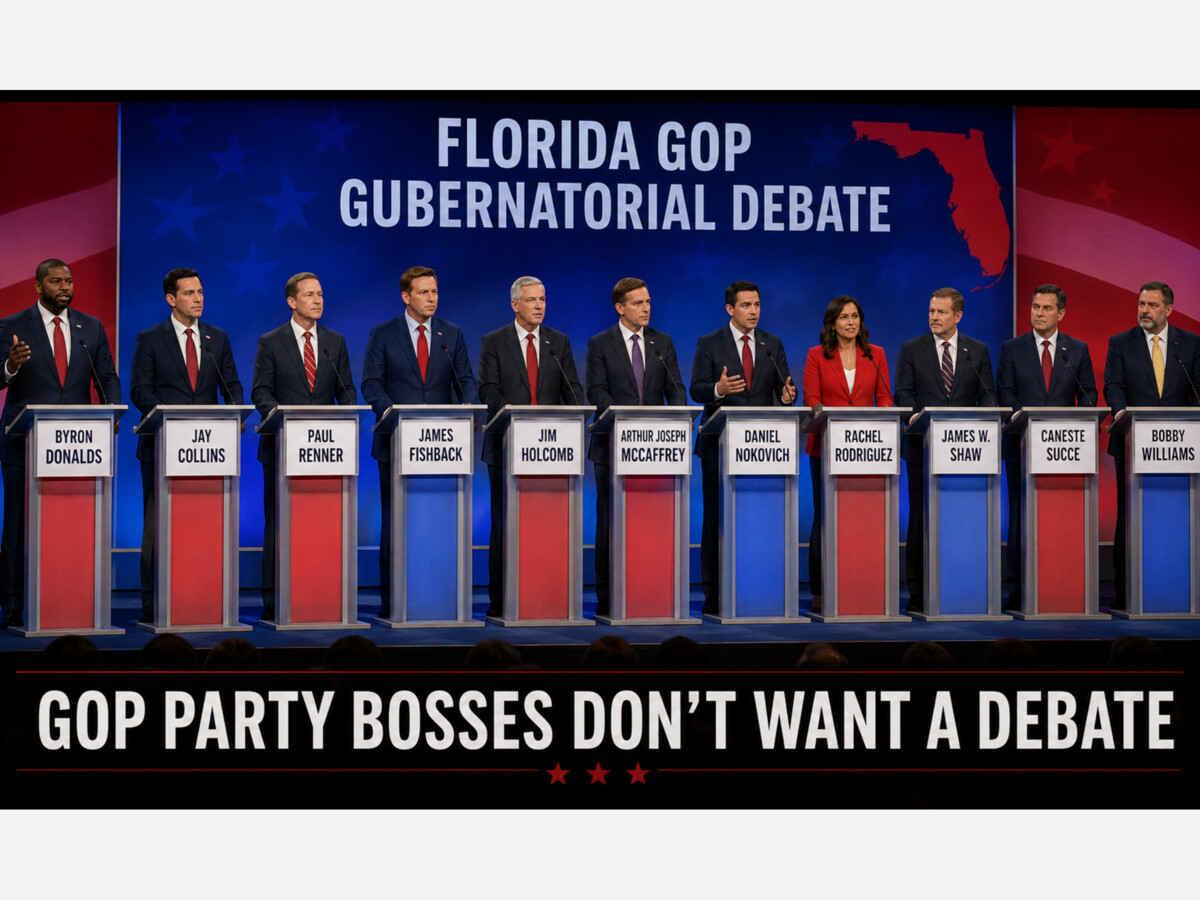



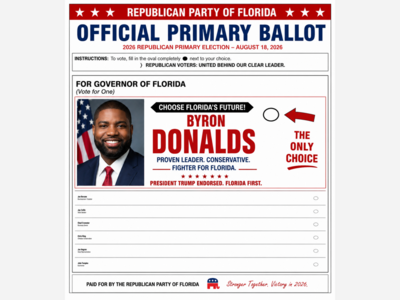
Florida Republicans are being asked to choose the next governor without a traditional debate stage.
The Republican Party of Florida originally announced it would coordinate statewide candidate debates for 2026, saying voters deserved a “clear, fair, and organized opportunity” to hear from candidates. But new party rules require candidates to meet a 10/10/10 threshold: 10 percent in polling, more than $10 million raised, and more than 10,000 donors. Under those rules, only Congressman Byron Donalds appears to qualify.
Governor Ron DeSantis has called that “counterproductive” and accused party leadership of trying to “engineer an outcome.” He is right about one thing: Republican voters deserve more than fundraising totals, endorsements, and controlled speeches.
So Tidings Media will do what the party will not. Over the next several weeks, we will publish deeper profiles of the Republican candidates for governor, including their records, campaign strategies, public policy positions, and the questions they should be asked.
Here is the starting field.
Credentials: U.S. Representative from Southwest Florida; former Florida House member; nationally known Trump ally.
Campaign strategy: Donalds is running as the Trump-backed frontrunner. His campaign is built around national Republican alignment, high-dollar fundraising, endorsements, and presenting himself as the candidate who can carry the MAGA coalition into Tallahassee.
Policy positions:
Credentials: Florida lieutenant governor; former state senator; decorated Green Beret; military amputee who continued serving after losing a leg.
Campaign strategy: Collins is running as the DeSantis-aligned warrior candidate. His message is service, discipline, public trust, and keeping Florida on the conservative path DeSantis built.
Policy positions:
Credentials: Former Speaker of the Florida House; Navy veteran; former state prosecutor; former legislator; former member of the Florida Board of Governors.
Campaign strategy: Renner is running on his legislative record and trying to claim the “effective conservative” lane. His pitch is that he helped build the DeSantis-era Florida model and has already delivered results.
Policy positions:
Credentials: Businessman; founder of Azoria; fourth-generation Floridian; online conservative activist.
Campaign strategy: Fishback is running as an insurgent, anti-establishment candidate. His campaign focuses on affordability, anti-globalist themes, development pressure, farmland, private equity, and data centers.
Policy positions:
Credentials: Qualified Republican candidate for governor.
Campaign strategy: Holcomb is part of the broader Republican field but has not received the same statewide media attention, polling attention, or platform visibility as Donalds, Collins, Renner, Fishback, or Rodriguez.
Publicly available policy profile:
Credentials: Qualified Republican candidate from Venice, Florida.
Campaign strategy: McCaffrey appears to be running as a lower-profile grassroots or outsider candidate.
Publicly available policy profile:
Credentials: Qualified Republican candidate for governor.
Campaign strategy: Nokovich is a lower-profile candidate who has qualified for the ballot but has not yet broken through in statewide press or polling.
Publicly available policy profile:
Credentials: Attorney; business builder; working mother; Cuban-American Republican candidate.
Campaign strategy: Rodriguez is running as a faith-forward, medical-freedom, anti-establishment conservative. Her campaign argues that Florida needs a “servant leader,” not another career politician.
Policy positions:
Credentials: Qualified Republican candidate; identified in public candidate summaries as a farmer.
Campaign strategy: Shaw appears to be a low-profile candidate whose candidacy may appeal to voters looking for a non-politician or rural voice.
Publicly available policy profile:
Credentials: Qualified Republican candidate; listed in public summaries as a public representative.
Campaign strategy: Succe is part of the qualified Republican field but remains largely unknown statewide.
Publicly available policy profile:
Credentials: Qualified Republican candidate; described in public summaries as an activist and food bank volunteer.
Campaign strategy: Williams appears to be running as a grassroots conservative candidate with a community-service background.
Publicly available policy profile:
This race is not only about Donalds, Collins, Renner, Fishback, or any one candidate. It is about whether Republican voters get to compare the field before the primary.
The next governor will inherit a fast-growing state with serious problems: property insurance, housing affordability, infrastructure strain, school accountability, water quality, development pressure, and an increasingly expensive cost of living.
A debate would not solve those issues. But it would force candidates to defend their records and answer the same questions in front of the same voters at the same time.
If the party will not give voters that opportunity, media outlets, civic groups, and voters should create it themselves.
Tidings Media will continue this series with deeper profiles of each candidate in the Republican primary.
Florida politics is changing quickly, and many of the most important stories never make national headlines. Subscribe free to Tidings Media for local headlines, state government coverage, civic updates, weather alerts, and practical Florida news without the clutter.
Subscribe free at Tidings.town.news.
Stay connected with Tidings Media: Tidings Media offers local curated news for Tampa, Tallahassee, Miami, Jacksonville, Orlando, Port St. Lucie, Fort Lauderdale, Cape Coral, Hialeah, Hollywood, Pembroke Pines, and Zephyrhills. Subscribe free at Tidings.town.news for local headlines, weather alerts, civic updates, practical Florida news, and community stories without the clutter.

Sunny, with a high of 80 and low of 61 degrees. Sunny in the morning, clear in the afternoon and evening,