Image



A Boston-based tower and infrastructure company is advancing plans for a data center site in Pinellas Park, adding urgency to a question Pinellas County commissioners have been circling for weeks: what power does the county actually have when the next controversial land-use fight is inside a city?
The answer, in this case, appears to be very little.
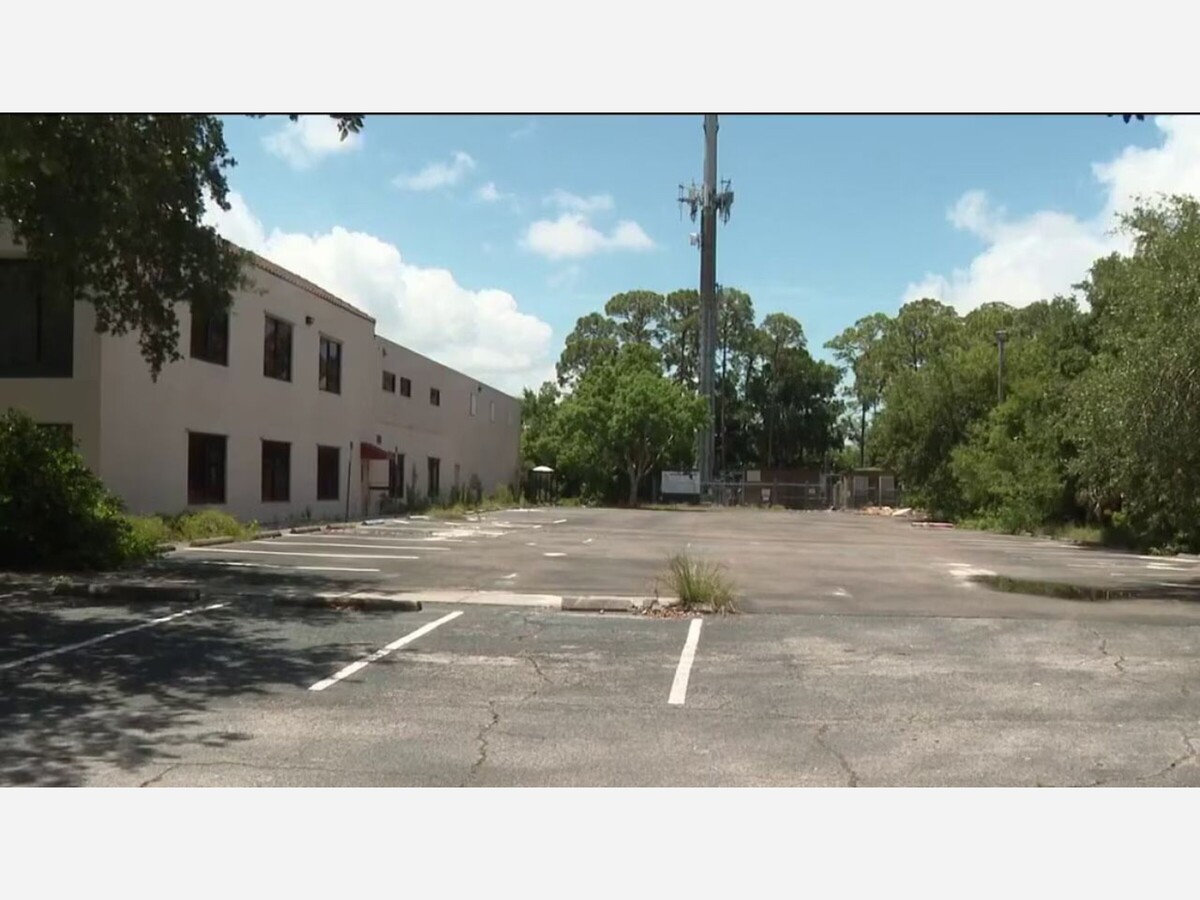
American Tower has identified a Tampa Bay “construction-ready” edge data center site at 10700 76th Court North, near the northwestern edge of Pinellas Park. Industry reporting earlier this year said the site was expected to offer roughly 4 megawatts of capacity on 2.3 buildable acres, with access to five fiber providers and a broader property footprint tied to an existing office building and communications infrastructure.[1]
The City of Pinellas Park, not Pinellas County, is the local government with direct land-use and permitting authority over the project. The city’s Building Development Division says it performs permit plan reviews and inspections and enforces applicable federal, state, county and local codes inside Pinellas Park. Its public development page also points applicants to the city’s own permits and business tax receipt portal, as well as the Pinellas Park Land Development Code.[2]
That distinction matters because the Pinellas County Commission has decided to maintain a business model that only allows it to intercede directly in zoning issues in unincorporated Pinellas. According to Pinellas County’s own unincorporated-area information, roughly 280,000 people, or about 36% of the county, live outside the county’s 24 cities. The Board of County Commissioners serves as the local government for those unincorporated residents, a small minority of the county's population.[3]
For everyone else, the county commission may have influence, opinions and political pressure. But zoning power generally rests with the municipality.
That means a data center proposal in Pinellas Park is fundamentally different from a data center proposal in unincorporated Pinellas. A commissioner can speak against it. Residents can organize against it. County staff can study the issue. But unless the project touches a county-controlled function, regional agency, utility issue or other county-level jurisdiction, the direct permitting fight belongs at City Hall in Pinellas Park.
The timing is awkward for county leaders. Florida has just adopted a new data center law, SB 484, that was promoted by Gov. Ron DeSantis as preserving local authority over zoning, permitting and land use, while also attempting to protect ratepayers and water resources from the costs of large-scale data centers.[4] The Florida Senate’s bill summary says the law maintains local government authority over comprehensive planning and land development regulations relating to large load customers, while also creating new requirements involving electric service and water permitting.[5]
That gives local governments tools. It does not magically transfer city zoning authority to the county commission.
Pinellas County’s own structure is now the issue. The county remains a large regional government with a nearly five billion dollar annual budget, a major administrative staff and countywide political platform. But on the land-use questions that increasingly animate public meetings, the commission’s direct zoning authority is limited to the unincorporated portion of the county.
In practical terms, that means Pinellas County government can be enormous without being all-powerful. It can tax, spend, regulate county departments, manage county services and govern unincorporated residents. But when a controversial project is filed inside a municipality, the county’s role is often secondary unless a specific county asset, county service or countywide regulatory function is triggered.
The Pinellas Park filing is likely to sharpen the debate over whether county officials should be spending more energy on countywide coordination, interlocal agreements and municipal partnerships, rather than implying that the county commission can simply ban projects wherever they appear.
The state’s new data center law does not remove the issue from local control. It reinforces that local control still matters. But in Pinellas, “local control” may mean 24 different city governments plus the county commission for the remaining unincorporated areas.
That is a fragmented model for a county facing increasingly regional land-use fights.
Supporters of data center development will argue that the Pinellas Park proposal is not a massive hyperscale campus and that edge data centers can bring digital infrastructure closer to users. American Tower’s construction-ready program has been described as a way to shorten development timelines by securing zoning and confirming utilities before an anchor tenant is signed.[6]
Opponents will point to the broader concerns that have followed data center projects across Florida and the country: electric demand, generator noise, water use, stormwater, backup power, proximity to neighborhoods and whether the public benefits justify the infrastructure burden.
Both sides will now have to make that case in the right venue.
For this project, that venue is Pinellas Park.
The larger political lesson belongs to Pinellas County. If commissioners want to shape the future of data centers countywide, they will need more than speeches from the dais. They will need municipal coordination, model ordinances, regional standards, state-law clarity and a candid public explanation of where county authority begins and ends.
Otherwise, the county may continue to look powerful on television while remaining structurally sidelined in the zoning fights that matter most to residents outside unincorporated Pinellas.
Footnotes:
[1] Data Center Dynamics, “American Tower secures zoning permission for two Edge data center sites,” Feb. 27, 2026. American Tower’s Tampa Bay site was described as 10700 76th Court, North Largo, with roughly 4MW of planned capacity on 2.3 acres and access to five fiber providers.
[2] City of Pinellas Park, Building Development / Permits, Inspections and BTRs. The city states that its Building Development Division performs permit plan reviews and inspections and provides development-code information for projects in Pinellas Park.
[3] Pinellas County, “Unincorporated Areas.” The county states that approximately 280,000 people, representing 36% of the county, live outside its 24 cities, and that the Board of County Commissioners serves as the local government for unincorporated residents.
[4] Executive Office of Gov. Ron DeSantis, May 7, 2026, announcement on SB 484. The governor’s office said the law preserves local authority over zoning, permitting and land use, while protecting ratepayers and water resources.
[5] Florida Senate, SB 484 (2026), Data Centers. The Senate summary says the bill maintains local government authority over comprehensive planning and land development regulations relating to large load customers and creates electric-service and water-permitting requirements.
[6] Data Center Dynamics, citing American Tower’s construction-ready program, reported that the model is designed to accelerate customer time to market by securing zoning approval and confirming critical utilities such as power and fiber.



Sunny, with a high of 79 and low of 62 degrees. Sunny in the morning, clear during the afternoon and evening,