Image
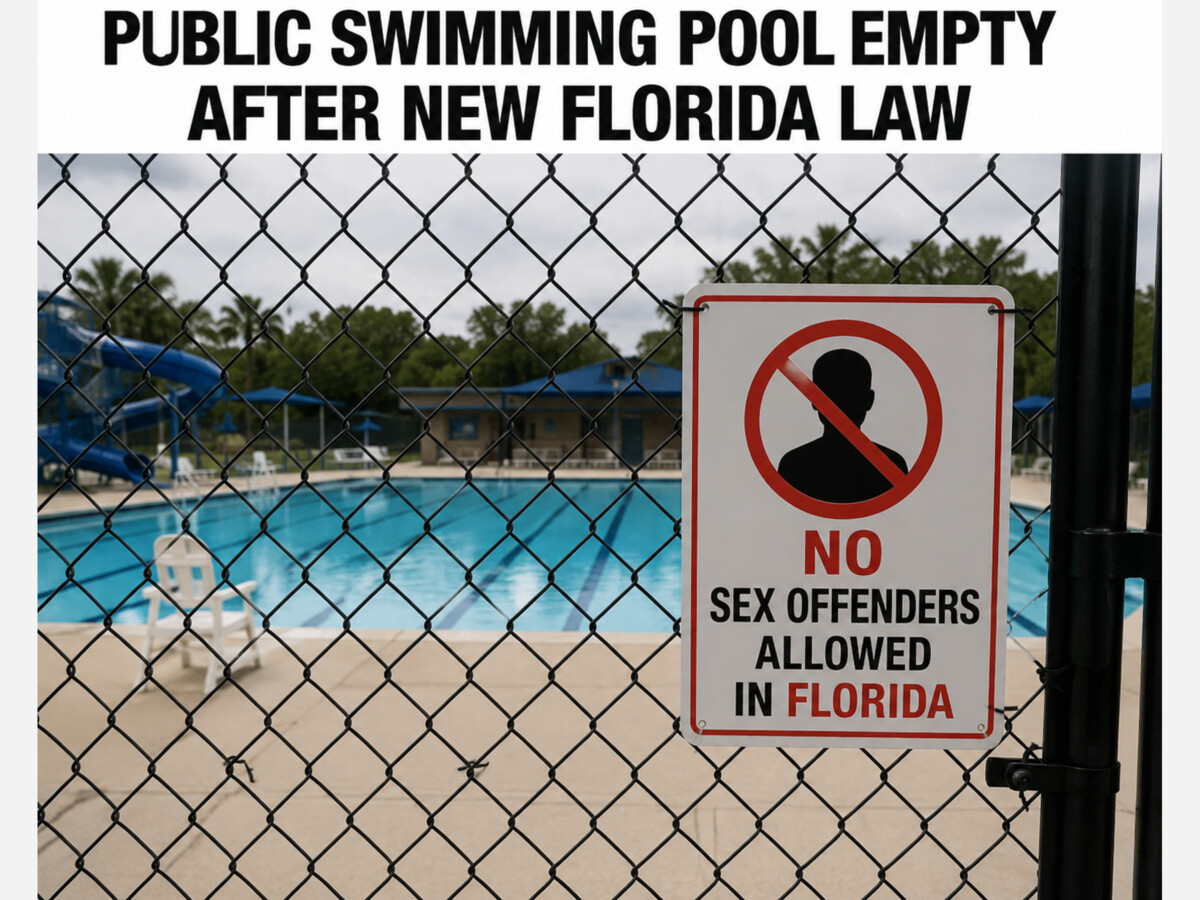



A new Florida law taking effect July 1, 2026, expands where certain convicted sex offenders may legally live, adding public swimming pools to the state's existing 1,000-foot residency restrictions. The change is one of the most significant expansions of Florida's sex offender residency laws in years and is expected to affect thousands of offenders statewide.
Under the new law, individuals convicted of specified sexual offenses involving victims under the age of 16 may not reside within 1,000 feet of a school, child care facility, park, playground, public swimming pool, or public bathing place. Florida lawmakers approved the measure during the 2026 legislative session as part of House Bill 45 and Senate Bill 212.
Florida already prohibited qualifying offenders from living near schools, parks, playgrounds, and child care facilities. The new legislation broadens those protections by including public pools, splash pads, wading pools, and many other public aquatic recreation facilities where children commonly gather.
The law also creates additional restrictions for certain offenders on probation, community control, or conditional release. In some cases, those offenders may be prohibited from working at or visiting public swimming pools without prior approval from supervising authorities.
Supporters of the legislation argue that public swimming pools are natural gathering places for children and should be treated similarly to schools and playgrounds when determining where convicted child sex offenders may reside. Attorney General James Uthmeier and other supporters cited child safety concerns during debate over the measure.
Critics counter that Florida's existing residency restrictions are already among the strictest in the nation and warn that expanding exclusion zones could make it increasingly difficult for offenders to find legal housing. Some advocacy groups argued during the legislative process that adding public pools and other water-related facilities could dramatically increase the amount of restricted land across the state.
The legislation includes a grandfather provision for some existing residences. Individuals who are already legally living in a qualifying residence generally cannot be forced to relocate simply because a new restricted facility is later established nearby.
With thousands of public pools located throughout Florida's cities, counties, apartment communities, and recreational facilities, the practical impact of the new law will become clearer after it takes effect on July 1. What is certain is that Florida has once again expanded the buffer zones designed to separate convicted child sex offenders from places where children frequently gather.



Sunny, with a high of 79 and low of 62 degrees. Sunny in the morning, clear during the afternoon and evening,