71° and Clear
Image



Visitors generated more than $36 million in bed-tax collections from February through April, but the record windfall also raises a familiar question: who decides where all that money goes?
PINELLAS COUNTY, Fla. — The tourists who packed Pinellas beaches, hotels, restaurants and spring events this year did more than fill parking lots and crowd causeways. They left behind a record amount of money.
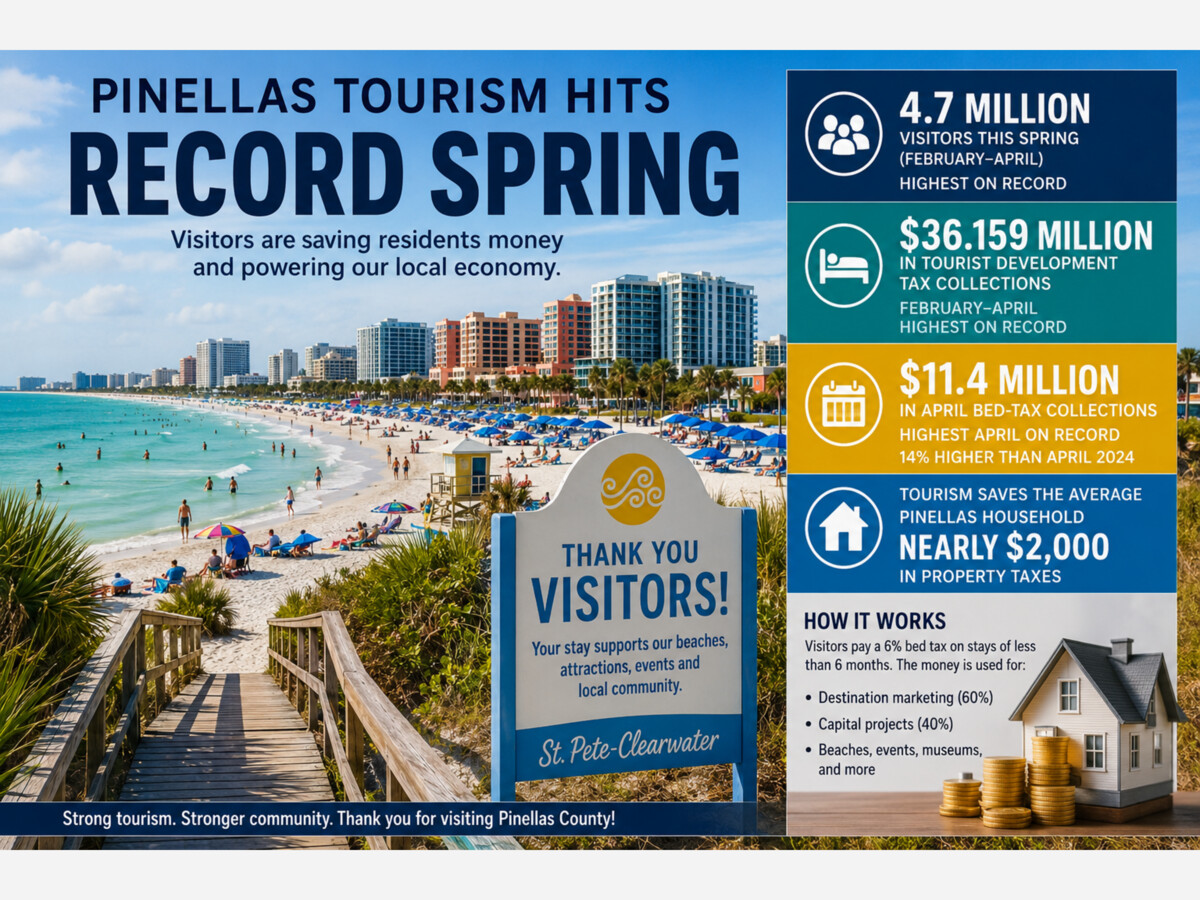
Visit St. Pete-Clearwater says Pinellas County welcomed 4.7 million visitors during the traditional February-through-April high season, producing $36.159 million in Tourist Development Tax collections. That is the highest total ever reported for that peak-season window.[1]
April alone generated more than $11.4 million in bed-tax collections, the strongest April on record and roughly 14% higher than the same month last year, according to the county’s tourism agency.[1]
The Tourist Development Tax, often called the bed tax, is a 6% charge on hotels, vacation rentals and other short-term accommodations rented for less than six months.[2] It is paid by overnight visitors, not directly by year-round homeowners, and has become one of Pinellas County’s most powerful funding streams.
County tourism officials point to a mix of beach travel, an extended spring break calendar and major events, including the Firestone Grand Prix of St. Petersburg and the Valspar Championship, as drivers behind the record spring. FOX 13 also reported that Treasure Island’s Bilmar Beach Resort neared 88% occupancy in April, a sign that the post-storm rebound has reached some of the beach businesses hit hardest by recent hurricanes.[3]
The financial impact goes beyond hotel rooms.
Visit St. Pete-Clearwater says tourism generates more than $10 billion in annual economic impact in Pinellas County. The agency also estimates that tourism and hospitality businesses contributed nearly $400 million in sales and property taxes during fiscal year 2025, helping the average Pinellas household save nearly $2,000 in property taxes.[1]
That number should not be read as a refund check or a direct tax cut showing up in the mail. It is the tourism agency’s estimate of how visitor spending, business property taxes and tourism-generated revenue reduce pressure on residents who would otherwise carry more of the local tax burden.
Still, for residents watching county budgets grow, the record tourism numbers matter.
Every hotel room sold in Clearwater Beach, Treasure Island, St. Pete Beach, Dunedin or Tarpon Springs helps feed a public money pipeline used for tourism marketing, beach nourishment, events and capital projects. Visit St. Pete-Clearwater says bed-tax money is split 60/40, with 60% allocated to destination marketing and 40% allocated to capital projects.[4]
Those capital projects can include high-profile public investments in beaches, museums, sports venues and other facilities tied to tourism. Florida law limits how Tourist Development Tax money can be used, allowing spending on items such as convention centers, sports stadiums, museums, tourism promotion, beach restoration and certain public facilities that can demonstrate a tourism-related impact.[5]
That legal restriction is important. Bed-tax money is not a general slush fund for county government. It cannot simply be moved into any public program commissioners prefer. But the list of allowed uses is broad enough to put enormous discretion in the hands of county leaders.
That is where the public should pay attention.
A record spring is good news for hotel workers, restaurant servers, small businesses, beach communities and the countywide tax base. It also means the pot of visitor-funded money is growing large enough to influence major public decisions for years at a time.
Tourism officials are right to celebrate the rebound. Pinellas beaches took real hits from Hurricanes Helene and Milton, and a strong spring season helps reassure visitors that the county remains open, attractive and competitive.
But record collections should also come with record transparency.
Residents deserve a clear accounting of how bed-tax money is awarded, who benefits, how projects are evaluated, and whether public investments actually produce the overnight stays and economic return used to justify them.
Pinellas County’s tourism economy is not an abstract marketing slogan. It is now one of the county’s most important financial engines. When it performs well, residents benefit. When those dollars are spent poorly, residents also live with the consequences.
This spring, visitors showed up in record numbers.
Now county leaders have to show residents that the money will be handled with the same seriousness they expect from every other taxpayer dollar.
[1] Visit St. Pete-Clearwater, “St. Pete-Clearwater Welcomed Nearly 5 Million Spring Visitors this Spring, Generating Record-Breaking Tourism Development Tax Collection,” June 22, 2026.
[2] Pinellas County, “Pay Tourist Development Tax.”
[3] FOX 13 Tampa Bay, “Pinellas County tourism: Record spring saving residents money,” June 23, 2026.
[4] Visit St. Pete-Clearwater, “Bed Tax.”
[5] Florida Statutes, Section 125.0104, “Tourist Development Tax; authorized uses of revenue.”



Sunny, with a high of 83 and low of 68 degrees. Sunny in the morning, clear for the afternoon and evening,