74° and Sunny
Image




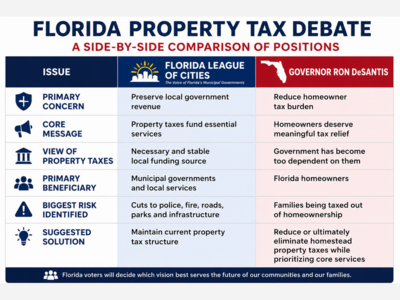
Florida voters approved Amendment 3 on Tuesday, lowering property taxes for Floridians on their primary homes. The measure drew about 62% of the vote, clearing the 60% supermajority required to amend the Florida Constitution [1]. Gov. Ron DeSantis and the Republican Party of Florida backed it [1].
Because the change is now part of the state constitution, the Legislature cannot repeal it in a regular session. Undoing it would take another constitutional amendment approved by 60% of Florida voters, the same threshold this one just met.
Amendment 3 raises the homestead exemption on non-school property taxes from about $50,000 to $150,000 in 2027 and to $250,000 in 2028. Starting in 2029, the exemption adjusts each year for inflation [2]. School taxes keep the existing $25,000 exemption, and homeowners will still owe non-school taxes on any value above the exemption. The bill gets smaller, but it does not go away [3].
The amendment also lowers the annual cap on assessment increases for non-homestead property, such as second homes, rentals and commercial buildings, from 10% to 5% for non-school levies. People who are not Florida residents by December 31, 2026, start with a $50,000 non-school exemption instead of the larger amounts. Counties and cities may spend property tax revenue only on purposes the amendment lists [4].
Palm Beach County's property appraiser estimated that the average homeowner there, who saves about $800 a year under the current exemption, could save roughly $1,500 to $2,000 in 2027 and $3,000 to $3,500 in 2028, depending on location [5].
Opponents built their campaign on warnings about cuts to essential services. The Florida Fraternal Order of Police, the Florida Sheriffs Association, firefighter groups and local government associations argued that lost revenue could mean slower emergency response and reduced public safety funding [12]. State economists projected local governments could lose about $12 billion a year once the amendment is fully phased in [12]. In Tidings Media's view, those warnings played on fear of worst-case outcomes and overstated the risk to local budgets.
School funding is untouched. School districts levy taxes separately, and the school-tax exemption stays at $25,000, so Amendment 3 does not reduce the property tax revenue that funds public schools [3]. The amendment also does not dictate which services get cut, if any. A House proposal to lock in minimum funding for police, fire and first responders died in the Senate and is not part of the final amendment [12]. That leaves those decisions with county commissions and city councils, which still set millage rates and budgets, and with the voters who elect them.
The amendment takes effect January 1, 2027, which is also Florida's annual assessment date. A home's value and exemptions as of that day set the 2027 tax bill, so the new $150,000 exemption is locked in from the start of the year. The savings then show up on this schedule:
Homeowners should keep an eye on that last step. Mortgage servicers set escrow payments from the most recent tax bill, which for all of 2027 is the November 2026 bill calculated under the old exemption.
If servicers keep collecting at 2026 levels through 2027, Florida homeowners with escrowed taxes will collectively pay far more into escrow than will ever go out in taxes. Homeowners will get that money back. Federal rules require a servicer to refund any escrow surplus of $50 or more within 30 days of its analysis, as long as the borrower is current on the loan [7]. Servicers may also keep a cushion of up to one-sixth of a year's escrow payments, roughly two months' worth [8]. Until the refunds arrive, though, the overpayment sits in escrow accounts instead of household budgets.
An analysis from mortgage valuation firm SitusAMC noted that when a change this large hits expected escrow payouts, servicers may need to run an off-cycle escrow analysis rather than wait for the annual review [9]. The same analysis pointed out that servicers earn income on the escrow balances they hold, which gives them little reason to lower payments early on their own [9]. As of this writing, no major servicer has announced how it will handle Amendment 3.
Tidings Media will be urging Florida legislators to press mortgage servicers for a statewide off-cycle escrow analysis, with new payments effective January 1, 2027, based on the lower taxes under Amendment 3. The Florida Office of Financial Regulation licenses non-bank mortgage lenders and servicers in the state [10], so legislators could start there. A January adjustment would put money back in homeowners' pockets right away and let every Floridian see the first phase of this constitutional change on a date certain, right on their mortgage statement.
The second step arrives one year later. On January 1, 2028, the non-school homestead exemption rises again, from $150,000 to $250,000 [2]. For many homeowners, that roughly doubles the savings of the first year, and from 2029 on the exemption grows with inflation so the benefit holds its value over time [2].
The same escrow question will come up again. Servicers should adjust payments when phase two takes effect in January 2028, not a year after the higher exemption is already in place.
Tidings Media will keep following Amendment 3 as it takes effect, including how mortgage servicers respond. Follow us on Facebook at @tidingsmediafl and on X (Twitter) at @tidingsmediafl for updates.



Patchy rain nearby, with a high of 84 and low of 72 degrees. Sunny in the morning, patchy rain nearby in the afternoon, overcast overnight.