62° and Clear
Image
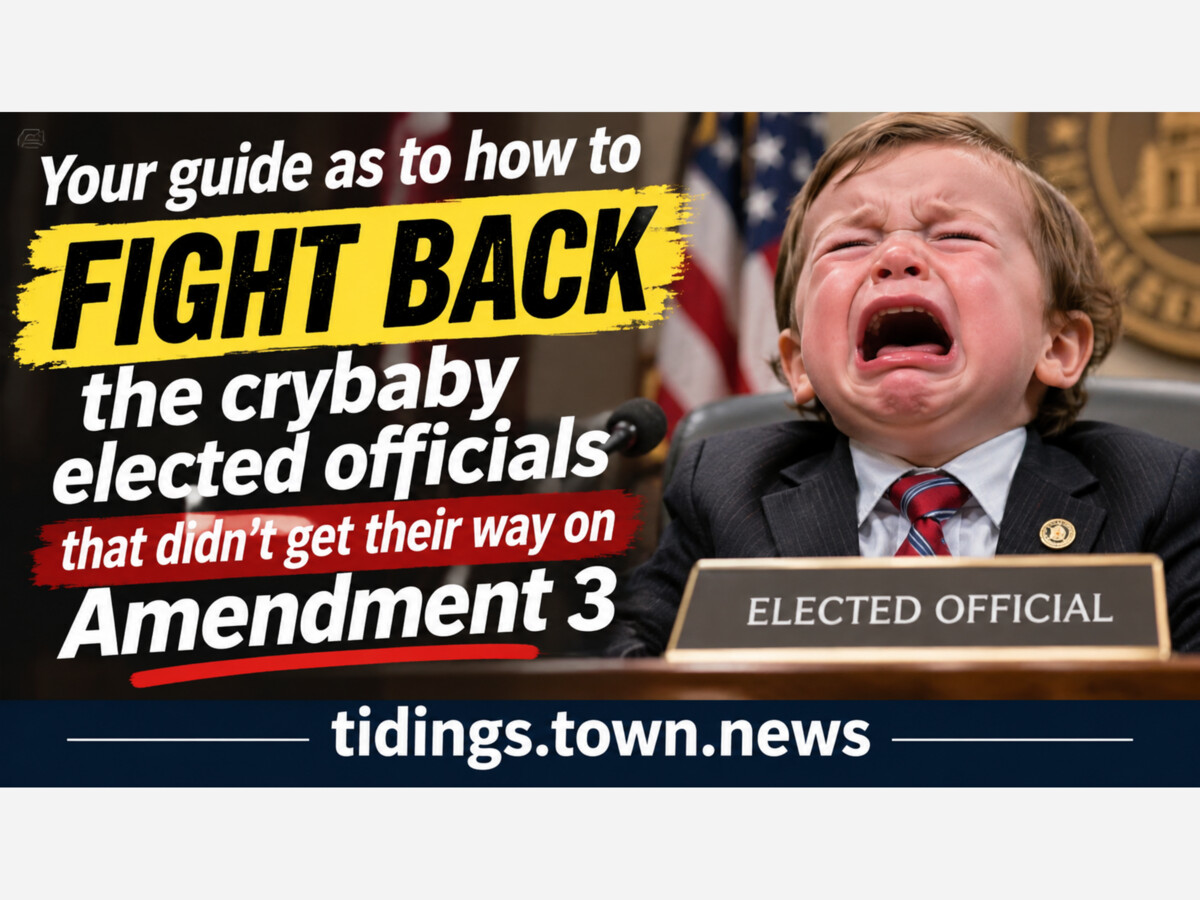



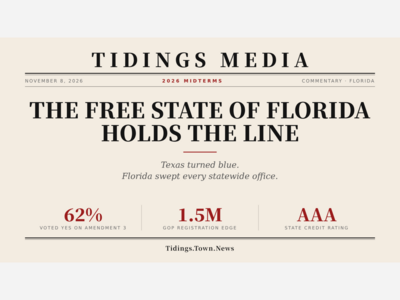
On November 3, about 62 percent of Florida voters approved Amendment 3, clearing the 60 percent supermajority the constitution requires. The non-school homestead exemption rises to $150,000 in 2027 and $250,000 in 2028.¹ Voters did this after a year of warnings from mayors, sheriffs, county commissioners, police unions and chambers of commerce that libraries would close and parks would go dark. They heard all of it and voted yes anyway.
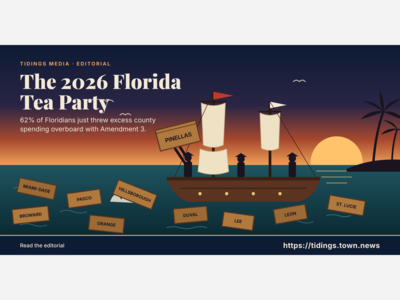
In 1773, colonists dumped tea in Boston Harbor because officials across an ocean were spending their money without asking. Florida's version happened at the ballot box, and the officials in question work at the county building down the road. From Pensacola to Miami, homeowners watched their tax bills climb every year while local budgets ballooned, and when they finally got a direct vote, they cut the money off at the source.
Amendment 3 is now part of the Florida Constitution. Repealing it would take another amendment and another 60 percent statewide vote.² The Tampa Bay Times has already floated an amendment to "fix" it, but that would need the same supermajority voters just used in the opposite direction. Any official waiting for a reversal is wasting a year that taxpayers are paying for.
Many local governments have answered the vote by going after the services families notice first. St. Johns County put a planned fire station on hold, and its commission chair described eliminating parks, libraries and health and human services to save about $50 million, a scenario he called hypothetical.³ Clearwater drew up a plan to cut nearly 140 full-time jobs and end funding for the Clearwater Historical Society and Keep Pinellas Beautiful.⁵ Largo calculated that closing its library and every park and recreation center would save just over $10 million.⁴ Library advocates say Volusia is looking at losing summer meals along with summer reading.⁶
In August, Pinellas County Commissioner Chris Latvala told beach community leaders the county would shut down libraries and close parks before touching public safety, and if it came to that, "so be it."¹⁰ Pinellas staff had already proposed eliminating the Fort De Soto lifeguards and cutting county funding for the Weedon Island and Shell Key preserves.¹¹ Tampa Mayor Jane Castor said the city would have to consider cutting services or charging residents fees to use them.⁴ None of these lists led with consultants, vehicle allowances, travel or administrative headcount. Officials picked the lifeguard stand because they knew it would make residents angry, and that is what a retaliation list is for.
Other governments went straight for the tax rate. Orlando's budget staff said the city may have to raise its millage rate for the first time in 13 years.⁷ A Sarasota County commissioner said the county may need to take a hard look at a higher rate.⁸ Voters cut the tax, and these governments are already talking about raising it back.
Listen to the people who lost. Miami-Dade Mayor Daniella Levine Cava called the amendment deceptive, and Miami Commissioner Damian Pardo compared it to a payday loan.¹² Jacksonville Mayor Donna Deegan said it punishes places like hers.¹³ Their message to 62 percent of the state is that voters were fooled.
Pinellas has its own version. This month, after Pinellas County Commissioners Vince Nowicki and Chris Scherer called for Pinellas County Administrator Barry Burton to step aside, fellow Pinellas Commissioner René Flowers argued that Amendment 3 reflected voters' desire for property tax relief, not necessarily dissatisfaction with county leadership.¹⁴ That reading is convenient for anyone who voted for the budgets, because it treats the revolt as a complaint about the size of the bill and leaves the spending off the table.
Voters wanted lower bills and a leaner government, and they saw those as one demand. Nowicki said so from the Pinellas dais, calling the vote a sign of a fundamental disconnect between what voters want and the county's taxing and spending, and arguing that overhead should have been examined before libraries, healthcare and preserves.¹⁴ A few officials elsewhere heard it too. Jacksonville Councilman Rory Diamond said he would push for a 25 percent pay cut for city employees earning more than $100,000, adding, "Enough with the stupid programs."⁹ Incoming St. Petersburg Mayor Charlie Crist, who voted no, said savings come before any new fee.¹⁵ Hold every local official in Florida to that standard.
Florida DOGE found that Miami-Dade, Broward, Palm Beach, Hillsborough and Orange counties budgeted $10.8 billion in general fund spending in fiscal 2025, up 49 percent from fiscal 2020-21.¹⁷ Miami-Dade's general fund grew about 80 percent over eight years.¹⁸ When state staff asked Miami-Dade to show where certain contracts were authorized in its budget, the county said that would take a "Herculean effort," according to the report.¹⁹ Population didn't grow anywhere near that fast. Home values did, and local governments spent the windfall.
Pinellas shows how modest the real cut is. Its fiscal 2027 budget is $5.137 billion across all funds,²⁰ up about 19 percent from $4.3 billion two years earlier.²¹ The county projects Amendment 3 will reduce general fund property tax revenue by about $124 million in fiscal 2028 and $184 million in fiscal 2029.²² The bigger number is about 3.6 percent of the total budget, so a 4 percent trim covers it.
In 2023 the same commission approved about $25 million in tourist-tax money for a Salvador Dalí Museum expansion priced at $65 million.²³,²⁴ Bed-tax money is restricted by state law, and officials will point that out. Their own Tourist Development Council has also discussed giving fast-growing tourism revenue a larger role in closing budget gaps.²⁵ They found a way to fund a museum wing, so they can find one for the lifeguards.
Florida DOGE reviewed 13 local governments and alleged more than $1.86 billion in excessive spending, though it found no fraud.¹⁶ Jacksonville paid $75,000 for a hologram of its mayor greeting airport travelers and $7.5 million for a one-mile sidewalk. Broward spent $175,000 on virtual art in the Metaverse and $44,000 promoting a UN gender equity treaty. Orlando spent $460,000 on a tree inventory, Pensacola $300,000 on an equity-focused strategic plan, and Hillsborough $950,000 on employee vehicle allowances.²⁶
The report also cited a $9 million art allowance for a Miami-Dade detention center and a $125 million shore power program for cruise ships.²⁷ It accused Palm Beach County of $344 million in excess spending,²⁸ including an $88 million increase for paratransit.²⁹ Personnel costs in Florida's 10 largest cities rose more than $1 billion in four years.³⁰ Local officials dispute many of these figures. If they think the auditors got it wrong, they should publish their own line-by-line cuts, and so far most of them have published threats instead.
Fiscal 2028 begins October 1, 2027, for counties and most cities, and it is the first budget built under Amendment 3. That gives residents about ten months to organize. Every step below works in any Florida county or city.
Officials will say most of the budget is restricted and public safety takes most of the rest. A 2025 Florida League of Cities analysis found that in 176 of Florida's 276 cities, police, fire and EMS spending already exceeds all property tax revenue.³⁴ In Pinellas the sheriff takes more than $501 million of the $1.125 billion general fund, so measured against that fund a $184 million loss is closer to 16 percent than 4.²⁰ The amendment lists public safety as a permitted use of property tax money but guarantees no funding level, and many officials read it as police and fire first.³⁶
Those are real constraints, and they make the case for cutting overhead first even stronger. With a smaller general fund, every dollar spent on consultants comes straight out of the library officials are threatening to close. They will also attack the state audit. Jacksonville's council auditor could verify only about $90 million of the $199 million DOGE attributed to the city,³⁵ and the report counted $30 million in police and fire pensions as wasteful because the fund manager had a DEI policy on its website.²⁸ If the state's audit is sloppy, local officials are free to publish a better one.
Then ask them why the first cuts offered across Florida are always the ones that hurt families, and why governments that grew their general funds by nearly half since 2021 can't find 4 percent without padlocking the places people go on Saturday. Sixty-two percent of voters already answered that question. Officials who respond by punishing those voters should hear about it at every meeting until the next election.


Sunny, with a high of 70 and low of 49 degrees. Sunny during the morning, clear for the afternoon and evening,