Image
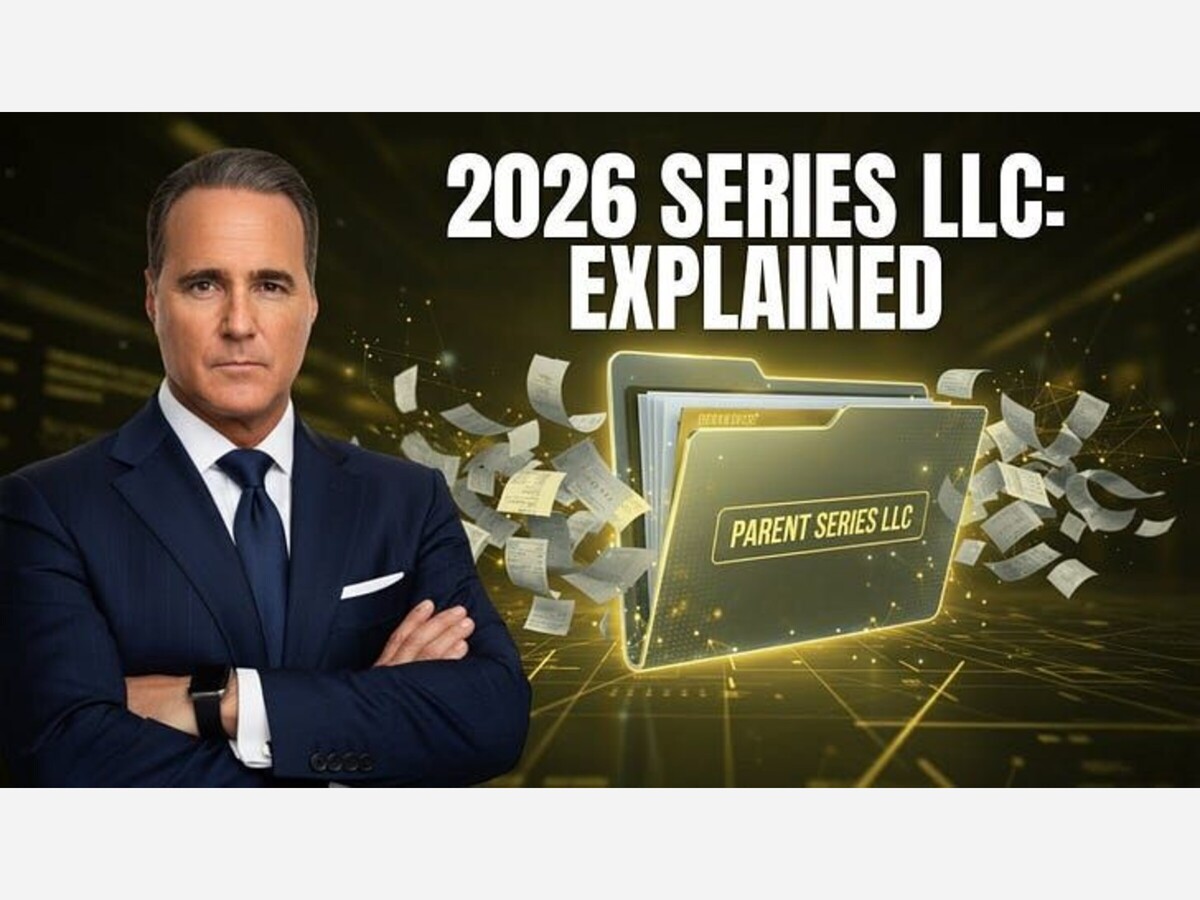
Florida Passes Great Legislation for July 2026 for Entrepreneurs



This original article was written by Tidings founder David Happe for his blog on Substack, and is reposted here with attribution and permission.
As many of you know, I am a member of the Florida Association of Legal Document Preparers. Before I took on my current full-time role in corporate America, I helped Florida residents complete certain Florida Supreme Court approved legal forms. I was also a solopreneur, who did most of my own legal work as a credentialed paralegal.I am not an attorney. Because of that, there is a narrow list of court authorized forms that non-attorneys may assist with, and business formation documents, including articles of organization, are not on that list.
What follows is not legal advice. It is legal information. Florida law is changing in a way that may benefit entrepreneurs and small business owners, and my goal here is to explain the development in plain English so you understand what is coming in 2026 and when. Everything I have read on this was from a few amount of law firms that are reporting on it. Nobody in the news is reporting on this, but Florida has over 3,000,000 registered small businesses, all of whom could probably use this.
I cannot prepare filings for you, review your documents, tell you what you should do in your situation, or answer questions that would require legal advice. Please do not email me asking for guidance on your specific circumstances.
If you are not confident you can handle Florida business formation on your own, whether through the state’s online filing system or do-it-yourself legal software, you should consult a competent Florida licensed attorney and, where appropriate, a qualified tax professional. - Dave Happe
Solopreneurs rarely have a “one business” problem. Most of us stack revenue streams: consulting, consumer products, vending, corporate training, content, maybe something regulated on the side.
That is smart. It is also risky.
Thanks for reading Hard Conversations with David Happe! Subscribe for free to receive new posts and support my work.
When everything sits inside one entity, one bad event can spread. A product claim. A contract dispute. A slip and fall at a vending location. A payment fight with a corporate client. The fear is not just the incident, it is the contamination.
 Plans starting at just $9.99 per month. 30 day trial.
 When I was running multiple businesses, I used UNITEL VOICE as my phone system. It’s virtual, it’s cheap, it worked with my cell phone, and they provide you with a free professional voice recording system. Check out UNITEL VOICE if you need a $9.99/month phone system that makes a solopreneur look like a big company. They have a 30 day money back guarantee, and I recommend you start with the $9.99 a month virtual company option with free professional voicemail recording. This post was sponsored by Unitel Voice, but I only recommend companies I trust.
Florida’s new Protected Series LLC law is designed to make it easier for small entities to reduce the liability spread among several owned entities, starting July 1, 2026.
Florida added the “Uniform Protected Series Provisions” to Chapter 605 of the Florida Statutes. The provisions have a stated effective date of July 1, 2026.
Two timing points matter:
You can plan now. You cannot “turn it on” early.
A Protected Series LLC in this new Florida law for 2026 is a parent LLC with internal compartments or silos called protected series.
Each protected series is intended to operate like a mini business, with its own assets and liabilities, while still living under the umbrella of one parent LLC.
The attraction for solopreneurs is obvious: fewer standalone LLCs to form and maintain, while still creating meaningful separation between business lines.
Here is a realistic example using fictional names.
Parent LLC: Harborview Venture Group LLC
Harborview has four protected series, or silos of businesses:
That structure matches how risk actually works. Products, vending, and professional services do not fail the same way, and they should not share the same blast radius.
Florida requires protected series names to follow a specific convention. Practically, this means your parent LLC name becomes the prefix for every protected series name.
So if you choose a parent name that is too narrow or too weird, you will inherit that problem across your entire portfolio.
Pick a parent name that can sit comfortably in front of everything.
If you want the protection people are counting on, each protected series needs to be operated with discipline.
At a minimum, that means:
This is the difference between a real liability firewall and a marketing story.
Even though you cannot create protected series until July 1, 2026, you can prepare like a pro:
Now through June 2026
Starting July 1, 2026
Florida does not require you to hire an attorney to form an LLC. The state provides an online filing system and public instructions for forming a Florida LLC.
That said, Florida’s own LLC filing instructions strongly recommend having legal counsel review documents prior to submission.
A protected series structure raises the stakes. The separation you are paying for depends on doing the naming, designations, reporting, contracts, and record keeping correctly. Many solopreneurs can file a standard LLC cleanly on their own. A protected series plan is the kind of thing that benefits from legal and tax review because “almost right” is often the same as “not protected” when something goes wrong.
So no, Florida law does not require an attorney for this. Practically, if you are building this for real liability separation, you will want one.
A Protected Series LLC can be a powerful way to run multiple businesses under one Florida umbrella.
It rewards disciplined operators who keep clean books, clean contracts, and clean boundaries. If you treat it casually, the structure becomes a false sense of security.
If you treat it seriously, it can become a real liability firewall for the solopreneur with multiple lanes.
This is not legal advice. This is legal information based on Florida law that is subject to change, including statutory amendments, administrative practices, and court interpretations. You should consult a Florida licensed attorney and a qualified tax professional before forming entities, creating protected series, or moving assets and contracts into any series structure. My opinions are for your entertainment and education, although you should do your own research and consult with an attorney on all business related legal matters like this. I am not your legal advisor, and I am not an attorney.

Sunny, with a high of 80 and low of 61 degrees. Sunny during the morning, clear in the afternoon and evening,