75° and Patchy rain nearby
Image
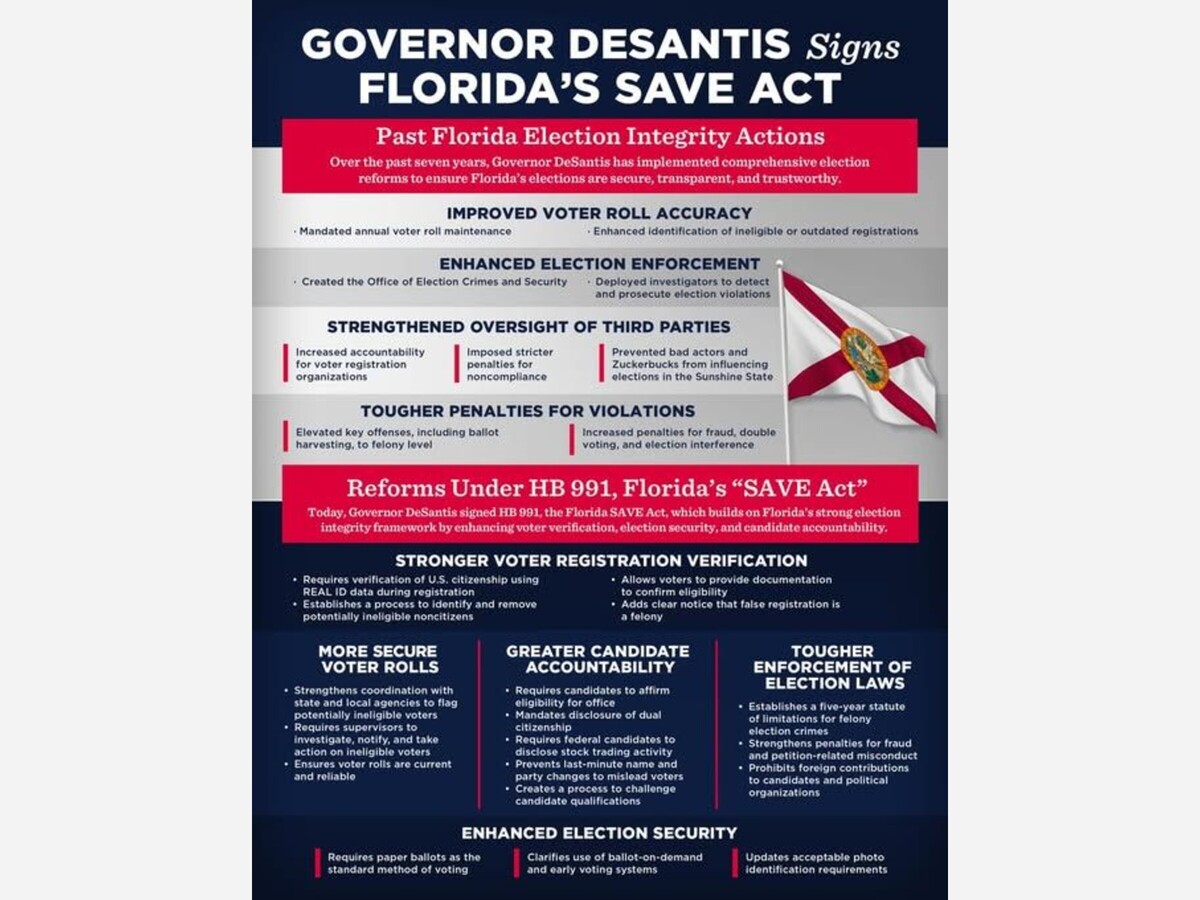



TALLAHASSEE, Fla. — Florida is moving forward with a major election-integrity law that will change how citizenship is recorded, how voter registration is verified, and which forms of identification may be used at the polls.
Governor Ron DeSantis signed House Bill 991, known as the Florida SAVE Act, on April 1, 2026. The law is scheduled to take effect January 1, 2027, meaning it will not affect Florida’s 2026 elections.
Supporters say the law strengthens confidence in Florida elections by making citizenship status clearer and improving verification procedures. Critics argue the new requirements could create additional hurdles for eligible voters who have difficulty obtaining documents.
One of the most visible changes will appear on Florida driver licenses and state identification cards. Under the new law, cards issued, renewed, or replaced after the effective date will indicate citizenship status. U.S. citizens will have that status reflected on the card, while noncitizens who are lawfully present will be marked differently. Current licenses and ID cards will remain valid until they expire.
The law also changes Florida’s voter registration process. Applicants will be required to provide or have verified acceptable evidence of United States citizenship. State election officials and supervisors of elections will use available state and federal records to help confirm voter eligibility.
For in-person voting, the law removes several forms of identification from the list of acceptable voter IDs. Student identification cards, public assistance cards, retirement center IDs, neighborhood association IDs, and credit or debit cards will no longer qualify. Florida driver licenses, Florida identification cards, U.S. passports, and other approved government-issued photo IDs will remain acceptable.
The legislation also adds transparency requirements for candidates and elected officials. Candidates will be required to disclose dual citizenship, and certain elected officials will face additional financial disclosure rules related to stock ownership and trading.
DeSantis and supporters of the bill have framed the SAVE Act as part of Florida’s broader push to secure elections and prevent unlawful voting. Voting-rights groups have challenged portions of the law, arguing it may burden eligible voters who lack ready access to citizenship documents.
“Safeguarding the electoral process to improve oversight and prevent unlawful influence has been a top priority for my administration since my first days in office,” said Governor Ron DeSantis. “Today I signed the election integrity bill, also known as the Florida SAVE Act. This legislation strengthens the security, transparency, and reliability of Florida’s election system. In Florida, we will always stand up for election integrity.”
For Florida voters, the practical message is simple: nothing changes immediately for the 2026 election cycle, but voters should watch for new registration and ID requirements beginning in 2027.
Stay connected with Tidings Media: Tidings Media offers local curated news for Tampa, Tallahassee, Miami, Jacksonville, Orlando, Port St. Lucie, Fort Lauderdale, Cape Coral, Hialeah, Hollywood, Pembroke Pines, and Zephyrhills. Subscribe free at tidings.town.news for local headlines, weather alerts, civic updates, practical Florida news, and community stories without the clutter.
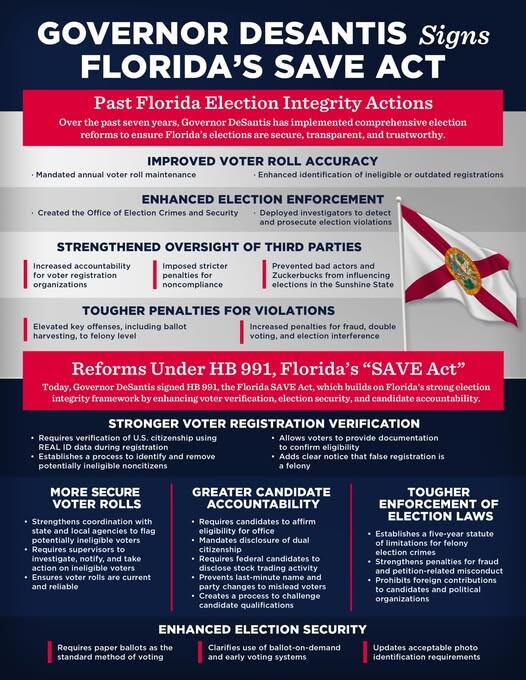
Governor Ron DeSantis signed House Bill 991 into law, which strengthens election integrity in the Free State of Florida in several key ways:
Fortifying Voter Registration and Verification
Ensuring Accurate and Up-to-Date Voter Rolls
Enhancing Election Security
Increasing Accountability for Candidates
Strengthening Enforcement of Election Laws


Light rain shower, with a high of 81 and low of 72 degrees. Light rain shower in the morning, mist in the afternoon and evening, light rain shower overnight.